Which is better, Amarone or Valpolicella?
A side-by-side comparison of Valpolicella, Ripasso, Amarone and Recioto: same grapes, four styles, four price points, and which one deserves your glass.
Which is better, Amarone or Valpolicella?
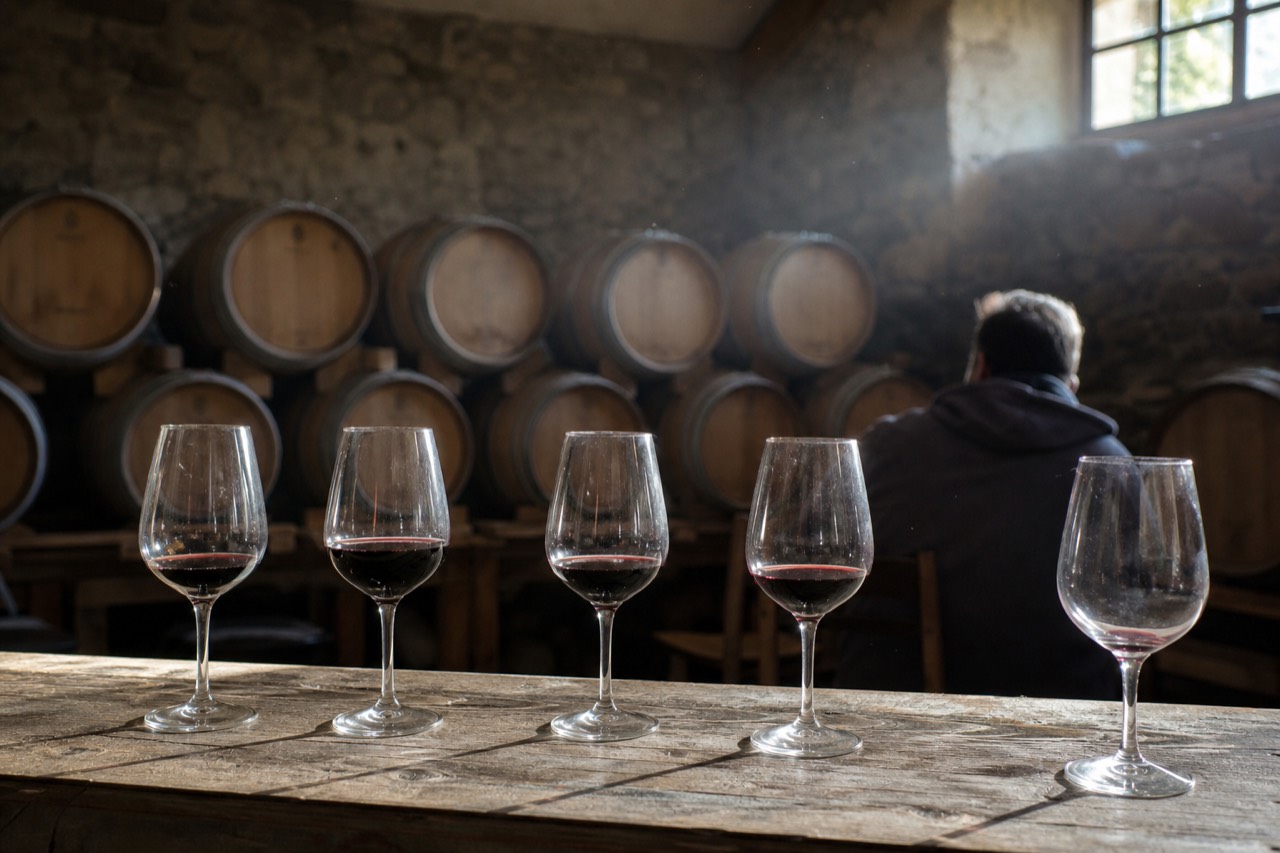
Neither is "better": they are the same grapes made into four different wines. Valpolicella is the everyday pour, Amarone is the occasion, Ripasso is the bridge between them, and Recioto is the dessert. Amarone is bigger, drier and far more expensive; Valpolicella is lighter, fresher and a third of the price or less. The real question is which style fits the moment, and a side-by-side tasting answers it in one afternoon.
The four wines all come from the same blend rules. Corvina and Corvinone together must make up 45 to 95 percent of any of them, with Rondinella at 5 to 30 percent, and the fruit comes from the same terraced hills north-west of Verona. What separates a EUR 12 bottle of Valpolicella from a EUR 60 bottle of Amarone is not the grapes. It is what happens after picking.
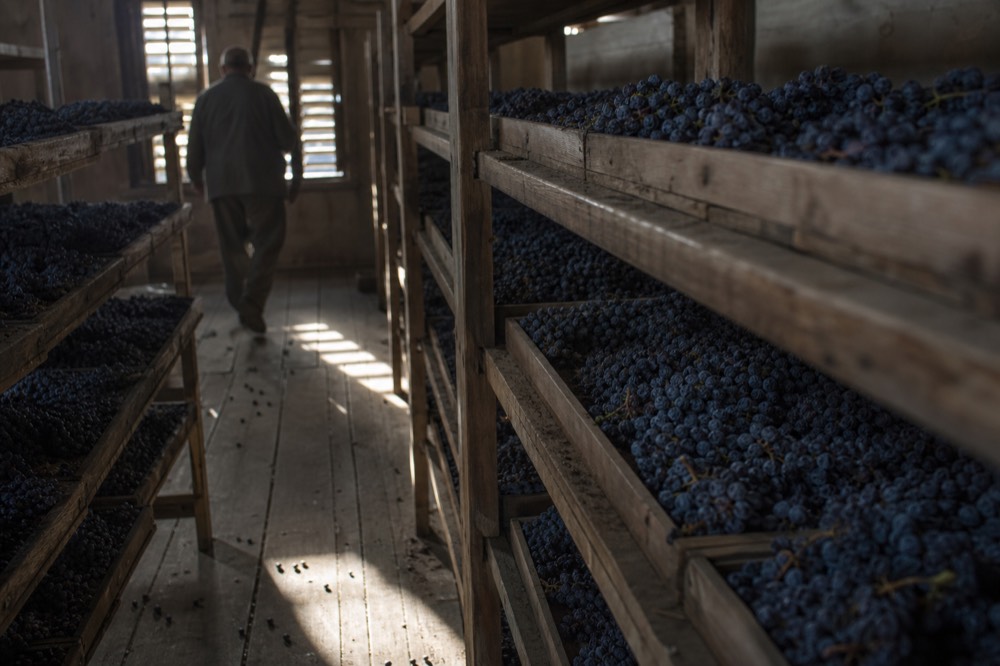
Valpolicella is fermented fresh, the way most red wine is, and it is meant to be drunk young and slightly cool. Amarone takes the best bunches and lays them out to dry in ventilated rooms for about three to four months, losing water and concentrating sugar and flavour. The disciplinare forbids pressing those dried grapes before 1 December, and the wine must then age at least two years from the following January. That is why one tastes of cherries and almond and the other tastes of dried figs, cocoa and spice, and why their price tags live in different worlds.
There is also a geography note worth knowing. The Classico zone, the oldest and most prestigious strip, covers the communes of Negrar, Marano di Valpolicella, Fumane, Sant'Ambrogio di Valpolicella and San Pietro in Cariano, with the Valpantena as a separate named sub-zone. A bottle labelled Valpolicella Classico comes from those hills; a plain Valpolicella can come from the wider, flatter zone around them. The same style names mean different things depending on which strip of the valley the fruit grew in, which is one more reason labels alone do not settle the Amarone-versus-Valpolicella question.
If you want to settle the question with your own palate rather than an article's, the cheapest way is a flight that pours the whole ladder in one sitting. A winery-direct tasting in the hills above Verona does exactly that, five wines from a white IGT up through Valpolicella, Valpolicella Superiore, Ripasso and Amarone, from $53 (checked September 2026), rated 4.9 across 279 reviews. You meet at the winery, there is no transport, and ninety minutes is enough to understand why the four styles cost what they cost.
The easiest version with transport from Verona is the small-group half-day that pours at least four Valpolicella wines, the full ladder from Valpolicella through Ripasso, Amarone and Recioto, with bread, cheese and salami. It runs from $105 (checked September 2026), rated 4.8 across 146 reviews, with hotel pickup in Verona, and it often sells out.
Is Amarone similar to Barolo?
No. Barolo is Nebbiolo from Piedmont, a high-acid, high-tannin wine with tar and rose aromatics; Amarone is Corvina-led and dried-grape built, low in acid relative to its 14 percent-plus alcohol, plush, sweet-spiced and almost never truly astringent. They are both prestigious Italian reds and often share a shelf, but they are built from opposite winemaking ideas: Barolo is fermented fresh and aged long, Amarone is dried first and can be released younger.
The confusion usually comes from price. Both sit in the premium tier of any Italian wine list, and both have DOCG status, Italy's top classification. But tasting them side by side is not a close contest: Barolo's tannin demands food and time, while Amarone's dried-fruit richness makes it drinkable on its own the day it is released. Amarone's minimum alcohol is 14 percent by law, with residual sugar allowed up to 9 grams per litre at that strength, which is why even a technically dry Amarone reads as faintly sweet.
Barolo also ages in a different way. Nebbiolo's tannin structure means the wine closes down and reopens over decades. Amarone's style is more about concentration than structure, and its Riserva designation, four years of aging from 1 November of the harvest year, is less often the point of the purchase. If you like Barolo, you may find Amarone too generous; if you find Barolo austere, Amarone is usually the friendlier of the two.
Serving temperature splits them too. Barolo wants a large glass, decanting and a hearty dish; Amarone is happy in a big glass at cellar temperature with aged cheese, braised meat or nothing at all. Valpolicella, meanwhile, is best slightly cool, around 14 to 16 degrees, and is the one of the four that suits a summer table. If your reference point for "important Italian red" is Barolo, expect Amarone to feel rounder, softer and sweeter-fruited, sometimes almost port-like in its youngest vintages.
There is one honest similarity: neither is a wine to buy blind. Vintage variation, producer philosophy and the share of dried grapes, capped at 65 percent of the maximum 12 tonnes per hectare crop, all swing the glass enormously. That is a strong argument for tasting before buying, which is what the cellar visits around Verona are for.
What wine is closest to Amarone?
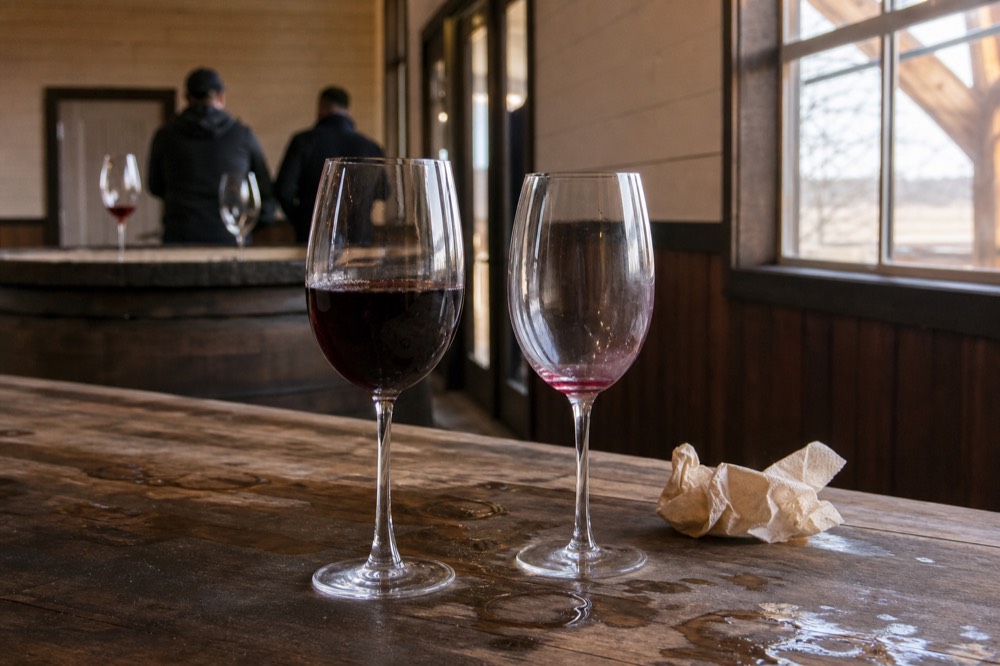
Ripasso is the closest wine to Amarone, by design: it is Valpolicella re-fermented on the pressed skins of Amarone or Recioto, borrowing body, colour and dried-fruit character without the drying stage or the price. After Ripasso, the nearest relatives are Recioto della Valpolicella, Amarone's sweet twin from the same dried grapes, and outside the region, a good dried-fruit red comes closest in feel, though nothing else shares the exact method.
Ripasso is the wine that makes the ladder interesting. The method is written into the rules: a single re-fermentation on the marc, the marc adding between 10 and 15 percent liquid, and the total Ripasso volume capped at twice the Amarone and Recioto volume. The result sits between the two poles, typically 12.5 percent alcohol minimum against Amarone's 14, and at a price roughly a third to a half of Amarone's. If you finish a glass of Valpolicella and want more weight without paying for Amarone, Ripasso is the answer, and it is the wine most local tables actually drink on a Tuesday.
Recioto is the family's secret. It comes from the same dried grapes as Amarone, but fermentation is stopped early, leaving a sweet wine with a minimum 12 percent effective alcohol plus at least 2.8 percent potential, and it was made in this valley long before anyone made the dry version deliberately. Recioto is the wine Amarone was born from, reportedly by accident when a batch of drying-grape wine fermented to dryness. It is harder to find and worth ordering when a cellar offers it.
How much should you expect to pay for each style?
In the Valpolicella zone expect roughly these bands per bottle: plain Valpolicella around $12-20 (checked September 2026), Valpolicella Superiore a step above, Ripasso around $20-35, Amarone from about $45 and rising steeply for named vineyards, and Recioto in the Amarone range for a half bottle. Tastings at the estates run about EUR 25-80 per person for a standard cellar visit and tasting, typically EUR 40-60 (checked September 2026), with premium and vertical formats at EUR 100-150.
Those estate tasting figures come from the producers' own published menus: Tommasi's ladder starts at EUR 25 and runs to EUR 120 for an Amarone vertical with chocolate, Tedeschi charges EUR 28 for a one-hour visit and EUR 180 for a two-decade vertical, Bertani's Classico experience is EUR 70, and Zenato lists EUR 40 and EUR 80 tours (checked September 2026). The spread tells you the same thing the bottle prices do: the entry point is gentle, and the ceiling is wherever your interest puts it.
Reservation is the norm at every one of these estates, most are open Monday to Saturday only, and Sunday visits are uncommon, so a tasting day needs a little planning. Groups over ten usually need a custom arrangement, and children under 18 often come along free at the family-run houses. None of this is onerous, but it does mean the spontaneous drive-up visit that works in some wine regions is not the Valpolicella way.
Here is the full ladder in one table, using the legal floors from the disciplinari rather than marketing claims:
| Style | Minimum alcohol | Minimum aging | Sweetness | Typical bottle band |
|---|---|---|---|---|
| Valpolicella DOC | 11% (Superiore 12%) | none (Superiore 1 year from 1 Jan after harvest) | dry, fresh cherry and bitter almond | everyday, the lightest bill of the four |
| Valpolicella Ripasso DOC | 12.5% (Superiore 13%) | not fixed in the rules we could verify | dry, but with Amarone's dried-fruit echo | roughly a third to a half of Amarone |
| Amarone della Valpolicella DOCG | 14% | 2 years from 1 Jan after harvest (Riserva 4 years) | dry, up to 9 g/l residual sugar at 14% | premium, from about $45 (checked September 2026) upward |
| Recioto della Valpolicella DOCG | 12% plus 2.8% potential | not fixed in the sources we could verify | sweet by definition | Amarone range, usually half bottles |
One number worth knowing when you look at a shelf: the consorzio's final 2025 figures put Amarone and Recioto at 13.58 million bottles, Ripasso at 27.37 million and plain Valpolicella at 16.50 million, all slightly down on 2024. Ripasso is the volume engine of the zone, which is why it is everywhere on local lists and why it is the best value of the four for most drinkers.
Which tour pours them side by side?
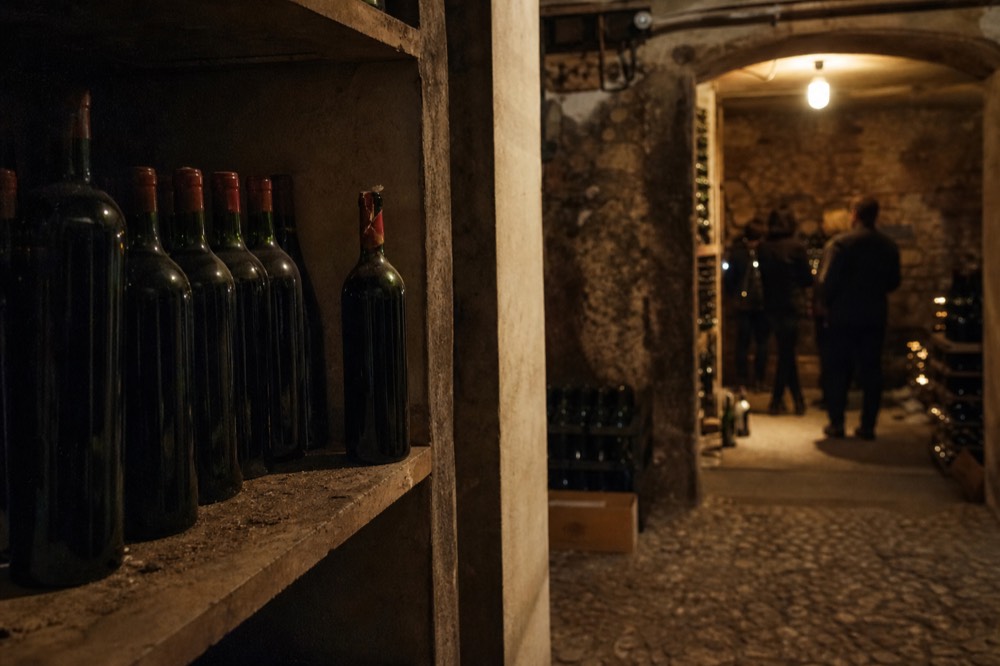
The small-group Amarone tasting tour from Verona pours Amarone and Ripasso at two winery visits in one half-day, with hotel pickup in the city centre, and it is the default recommendation for a first Valpolicella day. It is rated 4.9 across over 760 reviews and runs from $145 per person (checked September 2026), it often sells out, and it is run by a B-Corp-certified small-group operator.
Two wineries and two tastings in an afternoon is the right dose: enough to see how differently two estates treat the same grapes, not so much that the ladder blurs. The tour departs from Via Teatro Ristori in the city centre with hotel pickup in Verona, and every listing in this set offers free cancellation, so booking ahead costs you nothing if plans change (see Wine Tasting in Verona: City-Centre Enoteche, Costs and the Shortest Cellar Visit). The price sits in the middle of the range for guided half-days from Verona, well above the winery-direct tastings you drive yourself to, and well below the private full days.
The winery-direct alternative is the family cantina in the hills above Verona with the five-wine flight from $53 (checked September 2026), rated 4.9 across 279 reviews, meeting at the winery with no transport. It shows a "popular pick" label on its listing, and it is the cheapest way to taste Amarone in the set, though you trade away the cellar-hopping and the ride. For the full story of the two biggest styles in the zone, the deeper background is in our Amarone wine guide and the Ripasso and Recioto explainer.
If the price of Amarone rather than its taste is the thing you keep coming back to, the economics of drying grapes, yield caps and two years of aging are unpacked in why Amarone is so expensive. The short version: you are paying for the 40 percent grape-to-wine yield limit, the three to four months of drying, the storage time and the fact that roughly two-fifths of the zone's fruit is set aside for it. This site, Verona Wine Tours, keeps the whole ladder in one place, from the everyday Valpolicella pour to the Recioto you order once.
For the rule-obsessed, the grape percentages and aging minimums above come from the consolidated disciplinari published by the Italian agriculture ministry and the consorzio's English translation of the Ripasso rules. Everything in the glass, though, you can verify faster with a flight and an afternoon.
The short answers: they are the same grapes made four ways, Ripasso is the closest wine to Amarone, a half-day from Verona pours all four styles, and the price gap comes from drying, yield caps and two years of aging. The details are below.
Common questions about Amarone and Valpolicella
Which is better, Amarone or Valpolicella?
Neither is objectively better. Valpolicella is the fresh, everyday red at a third of the price or less; Amarone is the concentrated, dried-grape wine for occasions. Most people who taste both side by side end up drinking Valpolicella weekly and Amarone a few times a year.
Is Amarone similar to Barolo?
No. Barolo is Nebbiolo from Piedmont, high in acid and tannin; Amarone is Corvina-led, made from dried grapes, minimum 14 percent alcohol and plush rather than austere. Both are premium DOCG reds, but they are built from opposite methods.
What wine is closest to Amarone?
Ripasso, by design: it is Valpolicella re-fermented on Amarone marc, borrowing the dried-fruit character at a fraction of the price. Recioto, Amarone's sweet sibling from the same dried grapes, is the next closest.
Can you taste all four styles in one day from Verona?
Yes. Half-day small-group tours from Verona pour the full ladder, Valpolicella, Ripasso, Amarone and Recioto, at two wineries, with hotel pickup. Winery-direct tastings in the hills above the city pour similar flights for less, if you have a car.
Why does Amarone cost so much more than Valpolicella?
The drying stage, capped at 65 percent of the crop, shrinks the yield to a maximum 40 percent grape-to-wine, and the wine must age at least two years. You are paying for lost water, storage time and the small share of fruit that qualifies.
Is Amarone a sweet wine?
No, though it can taste faintly sweet. Dry Amarone may carry up to 9 grams per litre of residual sugar at 14 percent alcohol, which rounds out the dried-fruit richness. The sweet wine of the family is Recioto, made from the same dried grapes with fermentation stopped early.