Is Soave, Italy worth visiting?
A research-backed answer on whether Soave is worth your time: the castle, the medieval walls, the 28-minute drive from Verona, and whether the wine has outgrown its cheap reputation.
Is Soave, Italy worth visiting?
Yes, if you want a compact medieval hill town with an intact castle, walkable vineyards and a serious white wine scene, all 31 km, about 28 minutes by car, from Verona. Soave delivers a rewarding half day: walls, castle, a glass of Garganega at the source, and you are back in Verona for dinner.
That is the short answer. The longer one depends on what kind of traveller you are, and it is worth being honest about the town's two very different reputations.
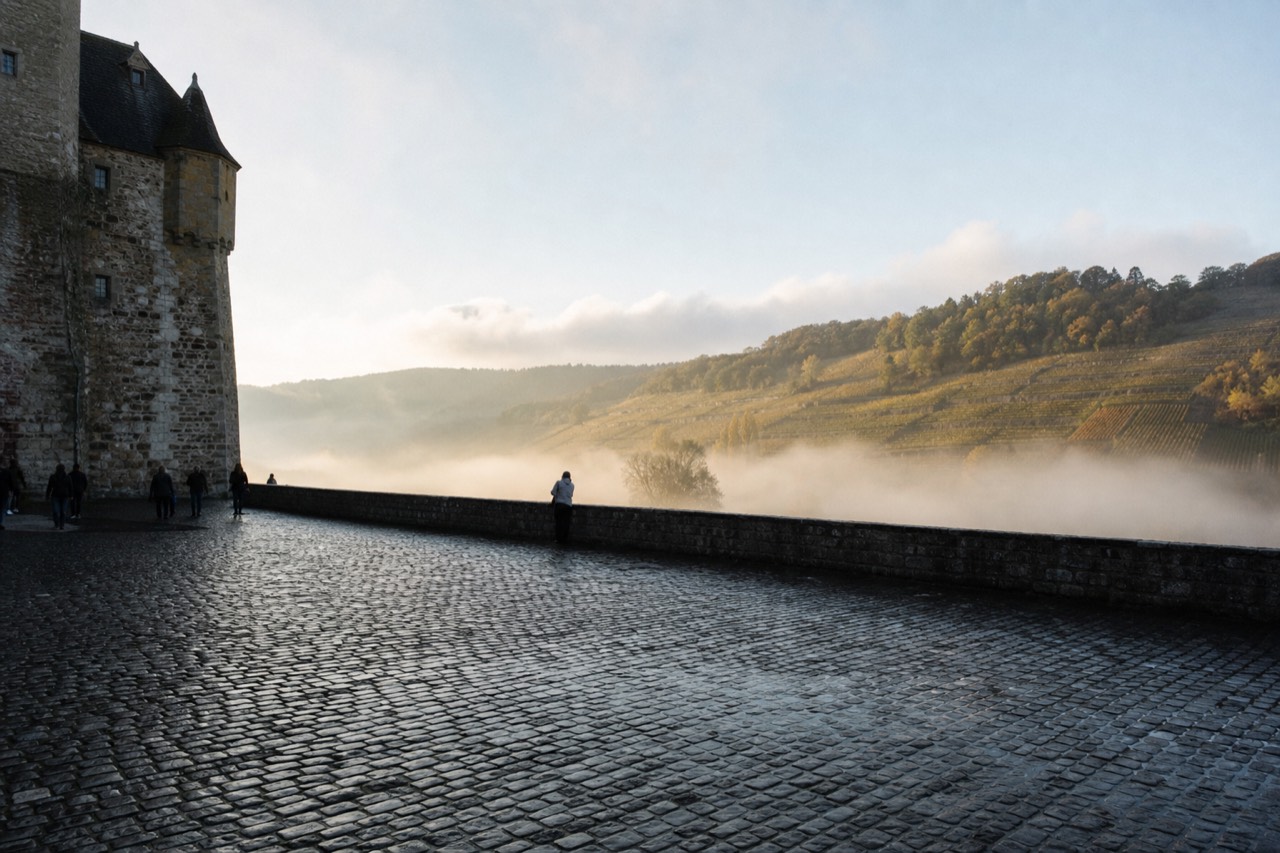
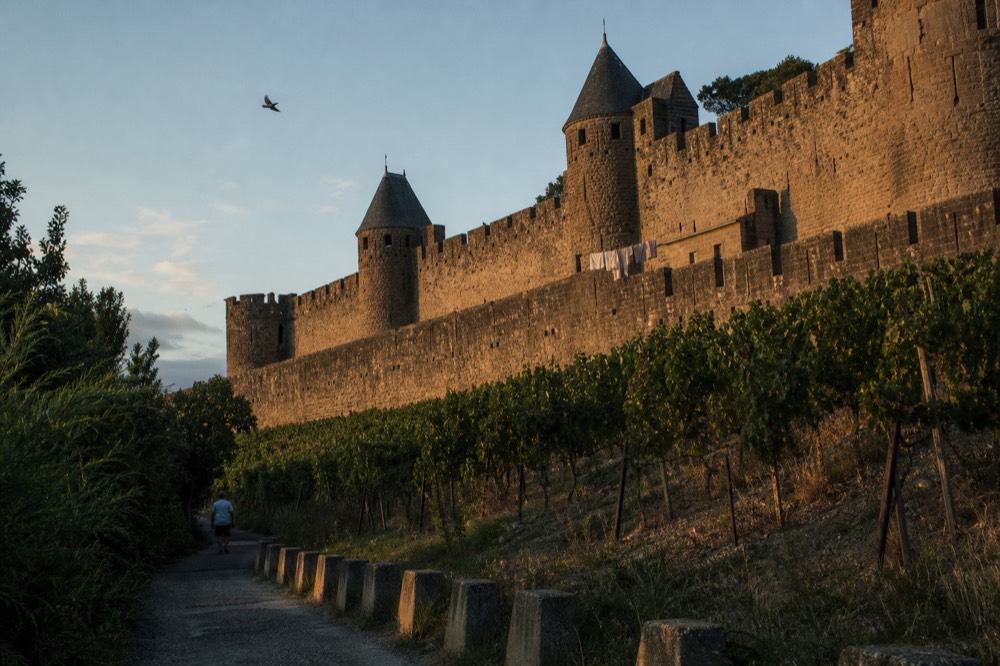
The first reputation is physical. Soave is one of the best-preserved medieval boroughs in the Veneto: a scaligero castle on the hill, nearly complete 13th-century walls, a main street of arcades and wine shops, and a plain of Garganega vineyards rolling right up to the gates. You can park, walk through the Porta Vicentina, climb to the castle, and taste wine at a family estate within a single afternoon. Few wine towns in Italy pack that much into a radius you can cover on foot.
The second reputation is the wine's, and it is more complicated. In the bulk-export era, decades back, Soave was shipped abroad in such volume, often at rock-bottom quality, that the name became shorthand for thin Italian white wine in markets like the United States and the United Kingdom. That reputation stuck even as the producers here rebuilt their standards. The consorzio's own numbers tell the story of a denomination trying to fix it: about 4,700 hectares of vineyard, a potential of roughly 40 million bottles, and 45% of production exported to 60-70 markets. Bottlings actually rose 3% in the first half of 2026, so demand is not the problem. Perception is.
So is it worth visiting? For a day-tripper based in Verona, yes, and the arithmetic is simple. Compare the drive times from central Verona:
| Destination | Distance from Verona | Drive time | What you get |
|---|---|---|---|
| Soave | 31 km | about 28 min | Castle, walls, white-wine country |
| Bardolino (Lake Garda) | 38 km | about 38 min | Lakefront, red-wine country |
| Lazise (Lake Garda) | 26 km | about 30 min | Lakefront village |
| Negrar (Valpolicella) | 14 km | about 20 min | Amarone cellars |
Soave is not a full-day destination in the way Lake Garda is, and it does not have the cathedral-and-opera weight of Verona itself. But as a half day, and especially as a half day combined with wine, it earns its place. The town also sits directly on the route between Verona and Venice, so travellers breaking that journey can stop without adding more than a few minutes.
If wine is the reason you would go, three products cover the three main ways to do it: a winery-direct tasting in Soave itself, a small-group half day that pairs Soave with Valpolicella, and a Garda-hills alternative if you would rather stay near the lake.
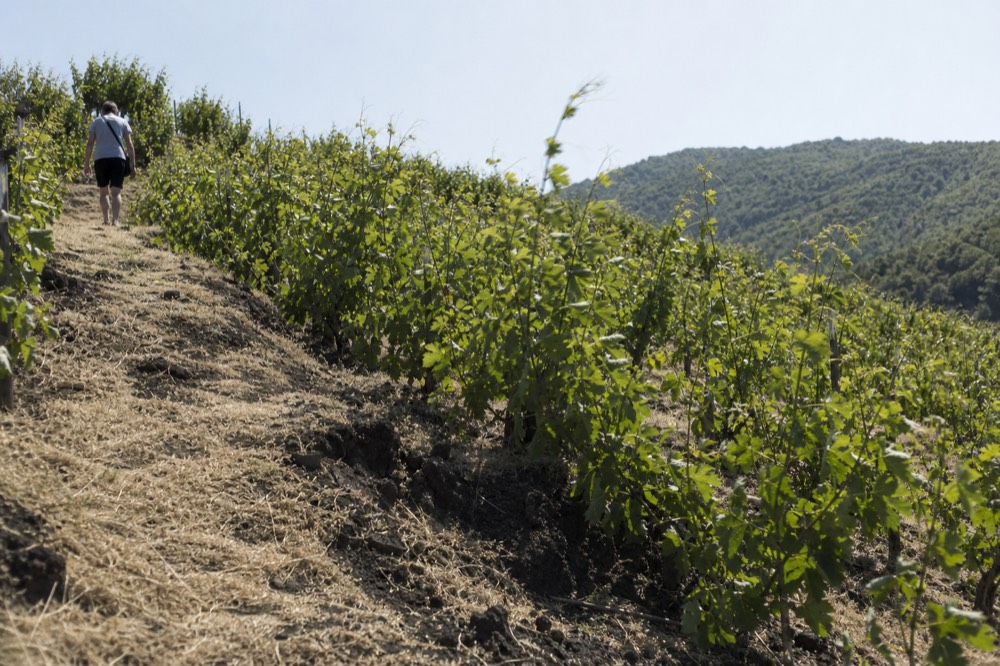
The cheapest of those three, the winery-direct tasting in Soave, runs from $34 per person (checked September 2026) and gets you a terraced-vineyard walk, a barrel cellar and four organic wines with cured meats, cheese and baked appetizers. The two-valley half day, from $170 (checked September 2026), is the only product that covers both Soave and Valpolicella in one outing from Verona, with hotel pickup. We will come back to both below, once we have dealt with the wine's reputation, because that reputation is the real question most visitors are asking.
What does Soave mean in Italian?
"Soave" is the Italian word for gentle, soft or suave, and it comes from the Latin suavis, meaning sweet. The town's name appears in medieval documents as Suavis, and local tradition ties it to the sweetness of the water and the mildness of the place. It is pronounced swah-veh, and it shares its root with the English word suave.
There is a pleasant irony in the name. A wine region called "gentle" spent decades being anything but gentle on its own reputation, flooding export markets with bulk bottles (see Where is the best place to do a wine tour in Italy?). But the name is older than the problem, and the word itself has a literary pedigree: Dante, in the Divine Comedy, uses "soave" to describe a gentle colour in the sky, which is the kind of fact that fits comfortably on a tasting-room label and happens to be true of the word's literary usage.
The name also does real work for the visitor, because it separates the town from the wine zones. Soave the town and neighbouring Monteforte d'Alpone make up the Classico zone, the historic heart where the best vineyard sites sit on volcanic and limestone hills. The wider Soave DOC spreads across thirteen communes toward the plains, where higher yields were historically the source of the bulk-wine era. When a label says Soave Classico, it means the fruit came from those original hillside communes.
Garganega is the grape that carries it all. The disciplinare requires a minimum of 70% Garganega in any bottle of Soave, with Trebbiano di Soave and Chardonnay allowed up to 30%, per the Soave consorzio. Garganega is late-ripening, thick-skinned and fairly neutral on its own, which is exactly why winemakers here obsess about old vines and hillside sites: the grape gives the structure, the site gives the character. A well-made Soave Classico tastes of almond, white flowers and citrus, with a saline finish that comes from the volcanic basalt of the hills.
The town itself rewards a slow loop. The castle, Castello di Soave, keeps summer hours of 9:00-12:00 and 15:00-18:00 Tuesday to Sunday, closed Monday (checked September 2026). The walls can be walked in part, the Palazzo del Capitano sits on the main piazza, and the whole historical centre is a ten-minute end-to-end stroll. If you time a visit for the third weekend of September, you catch the Festa dell'Uva di Soave, the 98th edition in 2026, with open cellars, tastings and a costume parade through the historic centre (checked September 2026).
Is Soave a cheap wine?
No, not any more, and the cheap reputation is a hangover from the bulk-export era decades ago. Today Soave spans from simple DOC bottles around EUR 10 to Superiore DOCG and single-vineyard Classico bottles that compete with fine white Burgundy on price and, for many tasters, on interest.
The honest version of the story goes like this. Huge volumes of Soave were once shipped abroad under industrial brands, often from over-cropped plain vineyards, and the name collapsed into "the cheap Italian white" in Anglophone markets. Production peaked, quality sank, and the denomination spent the following decades building firewalls: the Classico zone, the Superiore DOCG, and, in 2026, the most aggressive measure yet.
That is the information most first pages of search results will not give you: the region is voluntarily shrinking the claimable area of its basic wine by half to protect the name. Plain Soave DOC will become scarcer and better; the hills and the Classico zone become the story. For a visitor, this matters because the tasting rooms you can actually visit are mostly in that Classico heartland, run by families, not by bulk bottlers.
The quality ladder is easy to read on a label:
| Type | Zone | Minimum alcohol | What to expect |
|---|---|---|---|
| Soave DOC | 13 communes | 10.5% | Fresh, simple, everyday white |
| Soave Classico | Soave + Monteforte d'Alpone | 11% | Hillside fruit, more tension |
| Soave Superiore DOCG | Classico + Colli Scaligeri only | 12% | Structured, age-worthy |
| Recioto di Soave DOCG | Dried Garganega | 14% | Sweet, the first DOCG in the Veneto |
Recioto di Soave deserves a special word, because it is the region's quiet answer to anyone who thinks this is only a cheap white. Made from dried Garganega, sweet and concentrated, it was the first wine in the Veneto to receive DOCG status. If a tasting room offers you a pour of Recioto at the end of a flight, take it; it is the wine the locals save for themselves.
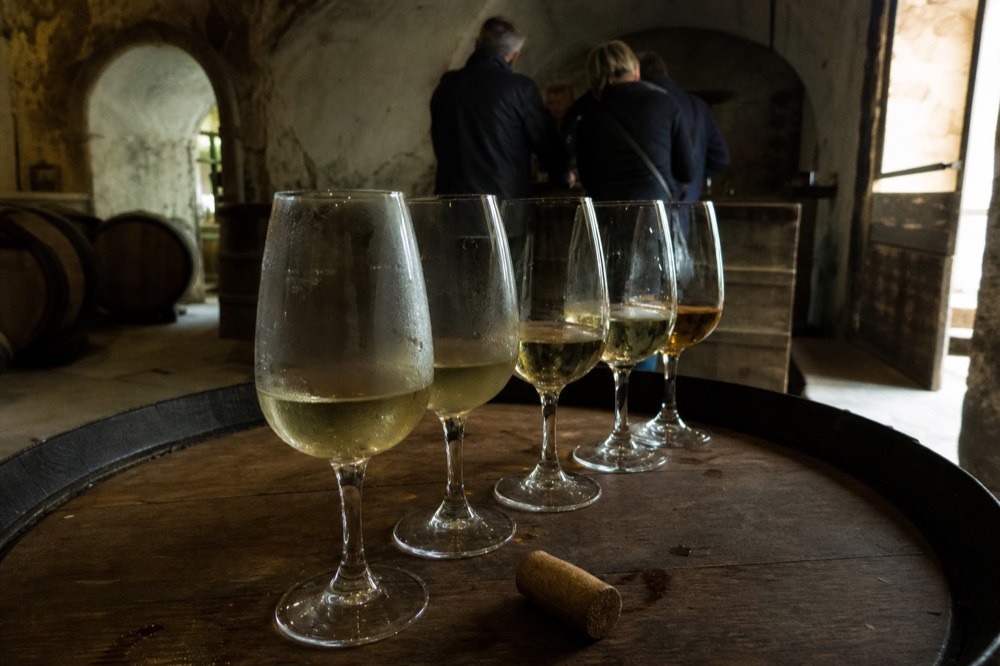
Tasting at the source is also where the "cheap" question gets settled fastest. Estate fees in Soave run at the gentle end of Italian wine country: Coffele, a family estate in the town, lists tastings at EUR 27 and EUR 42 per person (checked September 2026). Reservation is the rule at most estates, and Sunday openings are uncommon, so book ahead and plan a weekday if you can.
The winery-direct visit we named at the top is the clearest value in the whole set: from $34 per person (checked September 2026), rated 4.9 across 17 reviews so far, with a vineyard walk, a barrel cellar, four organic wines and a platter of cured meats, cheese and baked appetizers. It carries no transport, you meet at the winery in Soave, which suits anyone with a rental car or a willingness to take a taxi from the town centre.
For a deeper route into the region's wines, the dedicated Soave wine tour guide covers the estates, the zones and the planning in full, and it is the right next read if Soave is becoming the point of your trip rather than a side trip. That guide, like everything else on Verona Wine Tours, is written from the same verified facts file, so the prices and hours you find there will match what you read here.
Is Soave wine expensive?
At the top end, yes, and deservedly so: Superiore DOCG and single-vineyard Classico bottles can cost as much as a decent Chablis. At the everyday end, Soave remains one of the best value quality whites in Italy, with good Classico bottles widely available in the EUR 10-20 range.
The price spread inside one denomination is unusually wide, and it maps almost perfectly onto the zone system. A plain Soave DOC from plain vineyards is a EUR 6-10 supermarket wine. A Soave Classico from old hillside vines sits around EUR 10-20. A Superiore DOCG, which must come from the Classico and Colli Scaligeri hills, carry 12% minimum alcohol and age before release, moves into the EUR 20-40 band. Single-vineyard and Riserva bottles from the best producers go higher. Recioto di Soave, produced in small volumes from dried grapes, is the rarest and often the priciest of all.
Why does the top end cost that much? Because Garganega on volcanic hills, from old pergola-trained vines, farmed at 10 tonnes per hectare for the DOCG instead of 15 for the plain DOC, is expensive to grow and small in volume. The consorzio's 2026 surface-cap decision will push that scarcity further. You are not paying for a name that got famous; you are paying for a hillside that got protected.
For visitors, the practical version of "expensive" is the tasting room, not the bottle. Cellar visits in Soave typically run EUR 25-45 for a standard tour and tasting, with premium and vertical formats above that, and the winery-direct options in our set start at $34 (checked September 2026). Compare that with Valpolicella, where standard cellar tours and tastings usually run about EUR 25-80, typically EUR 40-60, and Soave is the gentler day for the wallet as well as the palate.
How do you fit Soave into a Verona trip?
Plan a half day: drive out in the morning, walk the walls and castle in two hours, taste at an estate at midday, and be back in Verona by mid-afternoon. Soave is 31 km, about 28 minutes, from the city, and it also breaks the Verona-Venice drive almost without a detour.
Logistics are the easy part. The A4 autostrada passes within a few kilometres of the town, parking sits outside the walls, and everything inside is pedestrian. If you are relying on trains, Soave is reachable via the nearby San Bonifacio station on the Verona-Venice line, though most wine visitors find a car or a tour simpler for the winery leg, since estates sit in the hills above the town rather than at the station door.
The harder choice is whether to do Soave alone or pair it with something. Two patterns work well:
| Pattern | Best for | The catch |
|---|---|---|
| Soave-only half day | White-wine lovers, castle fans, short trips | You must arrange your own winery visit or take the winery-direct tasting |
| Soave + Valpolicella in one day | First-time visitors who want both valleys | Needs a full-day or half-day tour with transport |
| Soave + Lake Garda | Travellers combining east and west of Verona | A lot of driving; consider two half days instead |
The two-valley option is worth spelling out, because only one product in the region does it from Verona in a single half day: a small-group tour with hotel pickup that runs two tasting sessions, one at a winery in Soave and one in Valpolicella, covering DOC and DOCG wines including Amarone, in about 4.5 hours. It is a newer, lightly reviewed listing, from $170 per person (checked September 2026), so there is less crowd wisdom to lean on, but the itinerary itself is unique in the set.
For travellers who prefer red wine or who are staying near the lake, the Garda hills option above Bardolino is the natural contrast pick: a vineyard walk, cellar visit, four wines and a food spread at a winery you drive to, from $52 per person, rated 4.8 across 155 reviews (checked September 2026). For everything on the red side of the region, our Verona wine region overview puts Soave in context against Valpolicella, Bardolino and Lugana.
Whatever you choose, book the winery before you book the castle: estates here work on reservation, most are closed Sunday, and the castle keeps fixed hours. A weekday morning arrival, tasting around noon, and the drive back along the autostrada is the template that works.
Soave is worth a half day from Verona for its castle, walls and hillside white wine, and the wine itself no longer deserves its cheap reputation. The answers below cover the name, the price ladder, the grape and the drive, so you can decide in a couple of minutes whether the town fits your trip.
Common questions about visiting Soave
Is Soave, Italy worth visiting?
Yes, as a half day from Verona. The town is 31 km, about 28 minutes by car, from the city, and combines a scaligero castle, near-complete medieval walls and walkable Garganega vineyards with tasting rooms at the source. It is not a full-day destination on its own, but it is one of the most rewarding half days in the Veneto.
Is Soave a cheap wine?
Not any more. The cheap reputation comes from the bulk-export era decades ago. Today the denomination spans from simple DOC bottles around EUR 10 to Superiore DOCG and single-vineyard Classico wines at fine-white prices, and from the 2026 harvest the consorzio has halved the surface claimable as plain Soave DOC to tighten quality further.
What does Soave mean in Italian?
The word soave means gentle or soft, from the Latin suavis, sweet. It is the same root as the English word suave, and the town's name appears in medieval documents as Suavis.
Is Soave wine expensive?
Everyday Soave is one of Italy's best value quality whites, with good Classico bottles commonly in the EUR 10-20 range. Superiore DOCG and single-vineyard bottles can reach EUR 20-40 or more, and Recioto di Soave, the Veneto's first DOCG, is the rarest and priciest style.
What grape is Soave made from?
Garganega, at a minimum of 70% of the blend, with Trebbiano di Soave and Chardonnay allowed up to 30%. The best sites are old, pergola-trained vines on the volcanic hills of the Classico zone around Soave and Monteforte d'Alpone.
How far is Soave from Verona?
About 31 km, roughly a 28-minute drive from central Verona, and the town sits beside the A4 corridor between Verona and Venice, so it also works as a stop on that journey.