Is Valpolicella worth visiting?
A straight answer for a two- or three-day Verona stay: what the Valpolicella valley looks like, which villages to see, how far they are from the city, and why a tour or driver beats a rental car.
Is Valpolicella worth visiting?
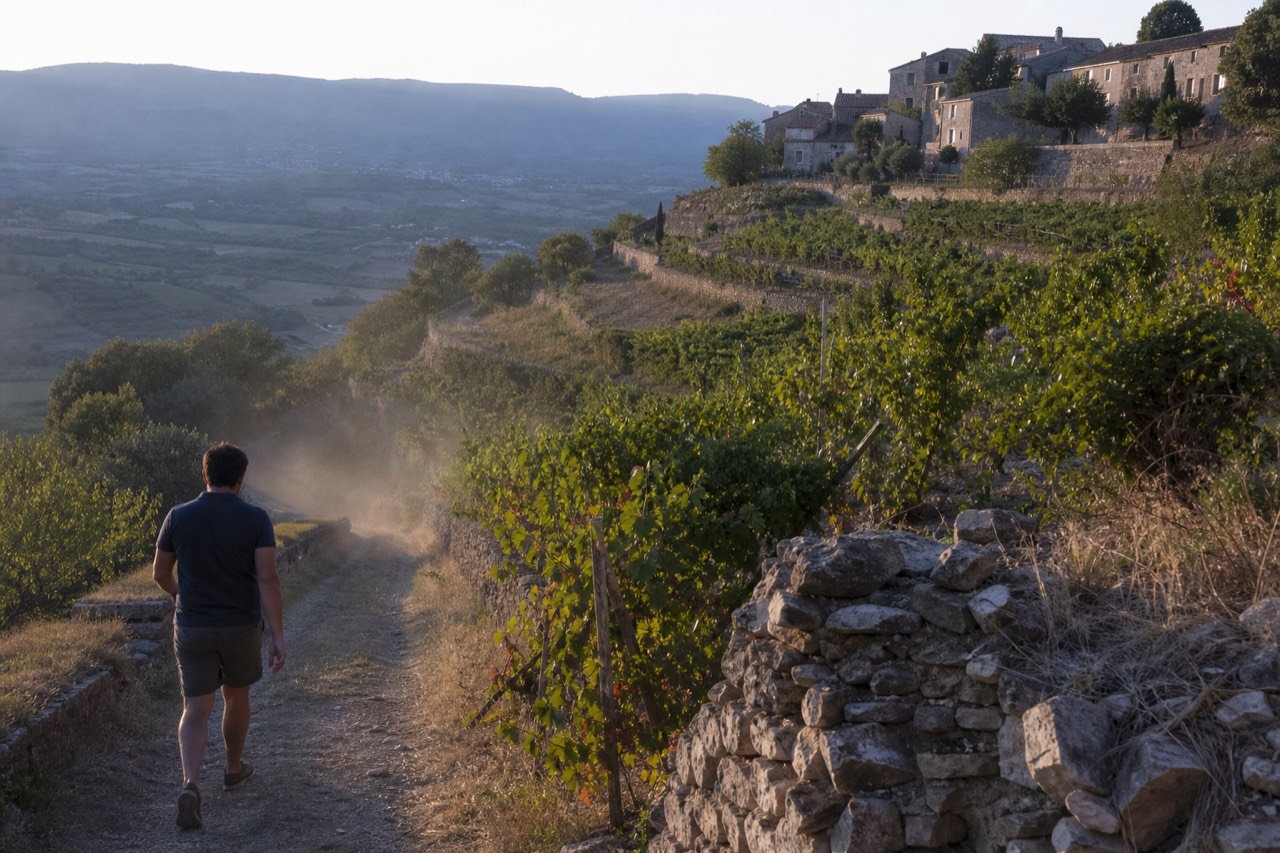
Yes. For anyone staying two or three days in Verona, Valpolicella is the most rewarding half-day you can add to the trip: a working wine valley of dry-stone terraces, olive groves and small villages, 15 to 25 minutes' drive from the Arena, with cellar visits that cost less than a city dinner.
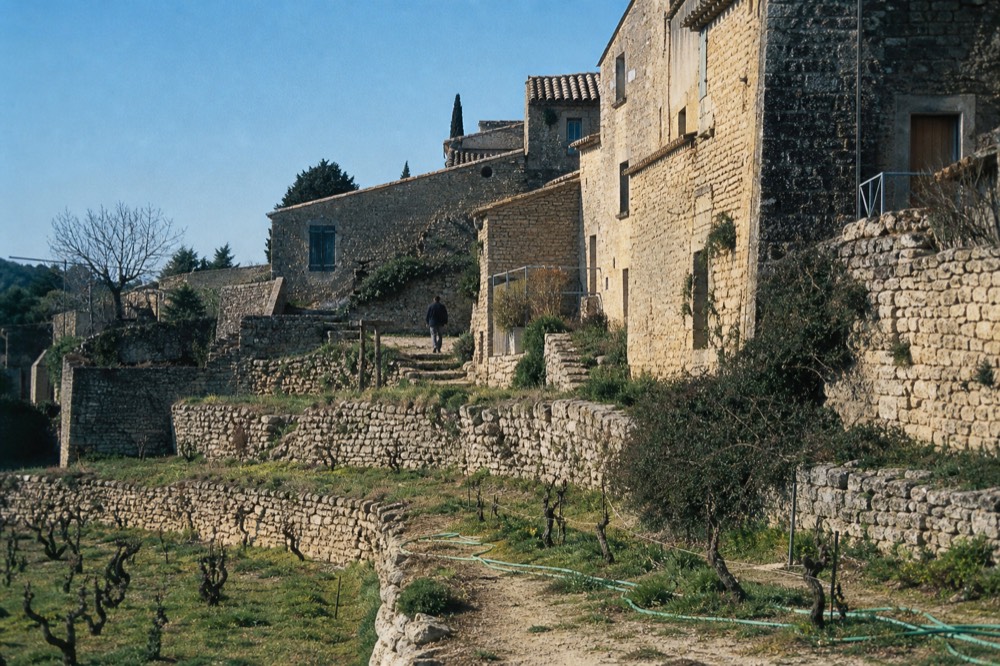
The valley sits directly north-west of the city, and that proximity is the whole point. You can have a mid-morning coffee in Piazza Bra, be standing in a hillside vineyard before eleven, and still be back in Verona for a late lunch. The landscape is not the dramatic amphitheatre of, say, the Langhe. It is softer and quieter: rows of Corvina and Rondinella climbing pergolas on terraces held by dry-stone walls, cypress markers around old estates, Romanesque parish churches tucked into hamlets that have no shop and no queue.
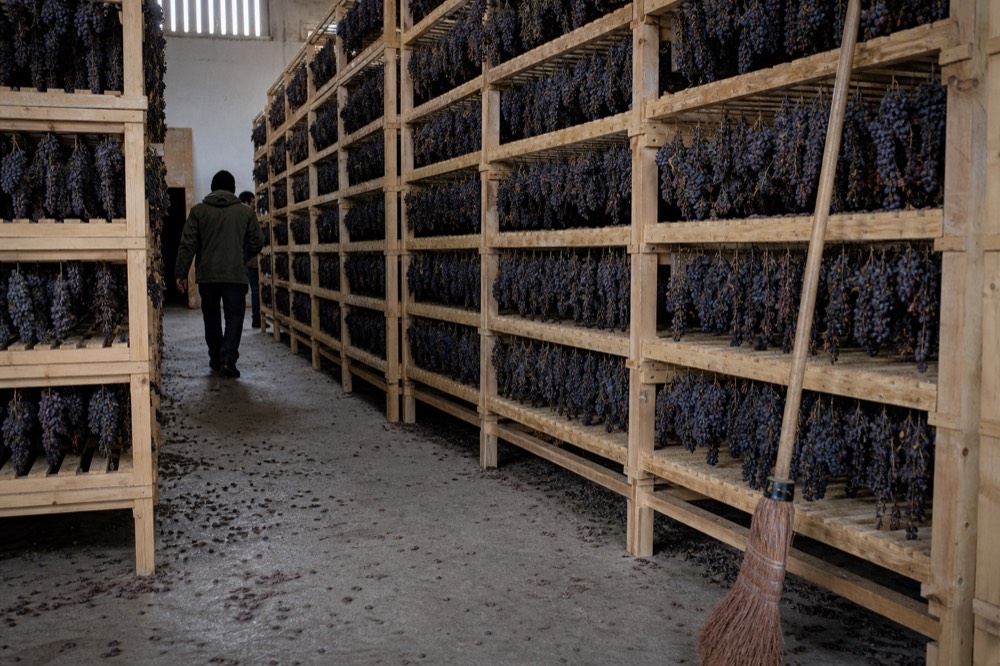
What the valley offers is depth rather than spectacle. This is the home of Amarone, one of Italy's most distinctive red wines, made from grapes dried in lofts through the winter before pressing. The four local styles, Valpolicella, Ripasso, Amarone and Recioto, all come from the same few grape varieties and the same hills, and tasting them side by side in a cellar is the fastest way to understand why the denomination matters. Our guide to Ripasso and Recioto breaks that ladder down in detail.
There is also a practical honesty to the place. The consorzio counted roughly 8,600 hectares of vineyard and more than 2,200 producers in 2025, and 53 percent of that vineyard, some 4,666 hectares, is now certified sustainable, up from 42 percent the year before. Most visits are small-scale: a family member walks you through the fruttaio where the grapes dry, pours four or five wines, sends you off with a bottle. It feels like a place that works for a living, which is exactly what many visitors to Verona are hoping to find. That mix of proximity and authenticity is what Verona Wine Tours was built to help people plan around.
For a first visit, three formats work well, and the right one depends less on budget than on how you want to spend the hours. A small-group guided tour with transport covers the ground without any planning on your part. A winery-direct tasting costs less and goes deeper on the wine itself. And a self-guided e-bike loop turns the valley into the activity rather than the backdrop.
What is the most beautiful town in Valpolicella?
There is no single postcard town, and that is the honest answer. The beauty of Valpolicella is distributed across five small communes, with Marano di Valpolicella the strongest single pick for hillside views and Sant'Ambrogio the pick for history and cellars, both under half an hour from Verona.
The valley's five Classico-zone communes are Negrar, Marano di Valpolicella, Fumane, Sant'Ambrogio di Valpolicella and San Pietro in Cariano. None is a tourist town in the Siena sense. They are stone villages of a few thousand people, with a church, a piazza, a couple of bars and, increasingly, agriturismi and tasting rooms. What they share is setting: each sits on a ridge or a valley floor with vineyards running straight up to the last house.
Here is how the main villages stack up against the city, using drive times from central Verona:
| Village | Distance from central Verona | Drive time | What it is known for |
|---|---|---|---|
| Negrar | 14 km | about 20 min | The valley's busiest hub, gateway to the Negrar valley wineries |
| San Pietro in Cariano | 15 km | about 23 min | Villa della Torre, historic estates, the valley's "front door" |
| Marano di Valpolicella | 18 km | about 25 min | Ridge-top views, some of the highest Classico vineyards |
| Sant'Ambrogio di Valpolicella | 21 km | about 25 min | Romanesque church, old cellars, the western Classico heart |
| Fumane | 23 km | about 26 min | The Fumane valley, boutique estates, quiet lanes |
Marano earns the "most beautiful" nomination because of its position. The village climbs a spur above the valley, and the vineyards around it are among the highest and steepest in the Classico zone, so the light in the late afternoon does things it simply does not do on the plain. Sant'Ambrogio counters with the Pieve of San Giorgio, one of the finest Romanesque churches in the Verona area, and with a concentration of historic cellars carved into the hillside. If you only have time for one and you care about the view, go to Marano. If you care about the wine and the architecture, go to Sant'Ambrogio.
San Giorgio di Valpolicella, the hamlet above Sant'Ambrogio that gives the pieve its name, deserves a specific mention. It is tiny, it is officially listed among Italy's most beautiful small villages, and it looks straight over the valley to the pre-Alps (see What is the most beautiful village near Verona?). You can drive up in a few minutes from the valley road, and the church square alone justifies the detour.
The easiest way to see any of this without hiring a car is a small-group half-day out of Verona. The Amarone half-day tour runs from around $105 per person (checked September 2026), picks up at your Verona hotel, and walks a group through at least four Valpolicella wines, the full ladder from Valpolicella up to Recioto, with bread, cheese and salami alongside. It carries a 4.8 rating (checked September 2026) across 146 reviews and often sells out, so it is one to book rather than leave to the day before. Check availability
What Italian town near Verona is famous for wine?
The town most famous for wine near Verona is Soave, about 31 km east of the city, a walled medieval hilltown whose name is on bottles in every wine shop in Italy. Within Verona's own province, the wine villages of Valpolicella carry the fame instead, and Sant'Ambrogio is the one most often named.
Soave is the honest headline answer. Its fortified castle and medieval walls are visible from the A4, and the Soave DOC name, grown mostly from the Garganega grape on about 4,700 hectares, has been exported for decades. The town itself is genuinely lovely: a scaliger castle, a double line of walls, and a historic centre small enough to see in an hour. Our Soave wine tour guide covers how to build a day around it.
But if the question is really about the Verona wine experience, the answer shifts. Verona's own famous wine is Valpolicella, and the valley's fame is spread across its villages rather than concentrated in one name. Sant'Ambrogio di Valpolicella is the commune most associated with the denomination's history, Negrar is the one most visitors pass through first, and Fumane has become the address for the smaller boutique estates that wine writers now chase.
There is a useful contrast in the two options. Soave gives you a town you can photograph and a white wine you probably already know. Valpolicella gives you a landscape and a red-wine story, the appassimento method, that you almost certainly do not. For a visitor with one free half-day, the valley wins on proximity: Soave is about 28 minutes from Verona by car, but the Valpolicella villages start at 20 minutes and string together naturally along one road.
If you are weighing the two against each other, the only product that covers both valleys in a single outing from Verona is a small-group half-day that visits one winery in Soave and one in Valpolicella, from around $170 per person (checked September 2026). It is a newer, lightly reviewed listing, so read the description carefully before committing.
Do you need a car to visit Valpolicella?
No, and for a wine region you usually should not drive yourself. Italy's legal blood-alcohol limit is 0.5 g/l, low enough that two or three cellar tastings can put a driver over it, so a tour, a driver or an e-bike is the sane choice.
The legal point is worth spelling out because visitors routinely underestimate it. The general limit is 0.5 grams per litre, and it is a flat 0.0 for drivers under 21, anyone in the first three years of a category B licence, and professional drivers. Between 0.5 and 0.8 g/l the sanction is an administrative fine of EUR 543 to 2,170 plus a licence suspension of three to six months, per the consolidated road code. A standard cellar visit pours four or five glasses. Even with spitting, which most casual visitors do not do, the arithmetic does not favour the self-drive plan.
The practical alternatives are better anyway. Verona's ZTL, the camera-controlled limited-traffic zone that has policed the historic centre since 1997, means a rental car is a liability in the city itself: hotel guests can enter only after the hotel registers the plate, and holiday-let guests cannot enter at all. Parking inside the ring runs EUR 2 an hour in 2026. You would be paying for a car to sit in a garage.
The self-guided e-bike option solves the problem elegantly. The Valpolicella e-bike half-day is exactly what it sounds like: you collect an e-bike at a meeting point in Verona, follow a mapped route into the hills, and stop for four glasses including Amarone with a cheese and salami appetizer. It runs from around $110 per person (checked September 2026), holds a 4.8 rating across 82 reviews, and often sells out. The pedalling is real but the motor flattens the valley's slopes, and the drink-driving question answers itself.
If e-bikes are not your thing, the winery-direct format works without any driving at all. Several estates sit on bus lines out of Verona, and the cheapest Amarone cellar visit in our roster, a historic Bertani family villa in Marano with a sommelier-led tasting, runs from around $42 per person (checked September 2026) with a 4.6 rating across 205 reviews. Check the listing for the pickup option, since transport is mentioned but not promised. It often sells out too, which tells you something about demand for Amarone country in 2026.
How much time do you need, and when should you go?
Half a day is enough to taste well and see one village properly; a full day lets you combine two wineries with lunch and a ridge-top drive. The best months are May, September and early October, when the vines are green or golden and the tasting rooms are neither booked out nor closed.
The half-day versus full-day question comes down to appetite. A half-day tour, typically four to five hours, covers two winery visits or one winery plus a village stop, and returns you to Verona by mid-afternoon. A full day adds a proper lunch, traditionally pasta with a Ragusano-style cheese course, DOP salami and a sweet finish, and gives the guide time to take the back roads. If Amarone is the reason you came, the full-day format is worth the upgrade: it is the only way to taste slowly enough to notice the difference between a Ripasso and an Amarone from the same estate.
On timing, autumn is the valley's best season. The 2026 harvest actually began in late August, about two weeks early on the historical average, after a hot, dry Veneto summer, with the consorzio estimating slightly over 861,000 quintali of grapes. The Region cut the yield cap to 10 tonnes per hectare for the 2026 vintage, down from the 12 in the rulebook, and capped how much fruit could go to the drying lofts, so the hills in September and October are working hills, full of trailers and picking crews. That is a spectacle in itself, though it also means some estates pause visits during the busiest picking weeks, so book ahead either way.
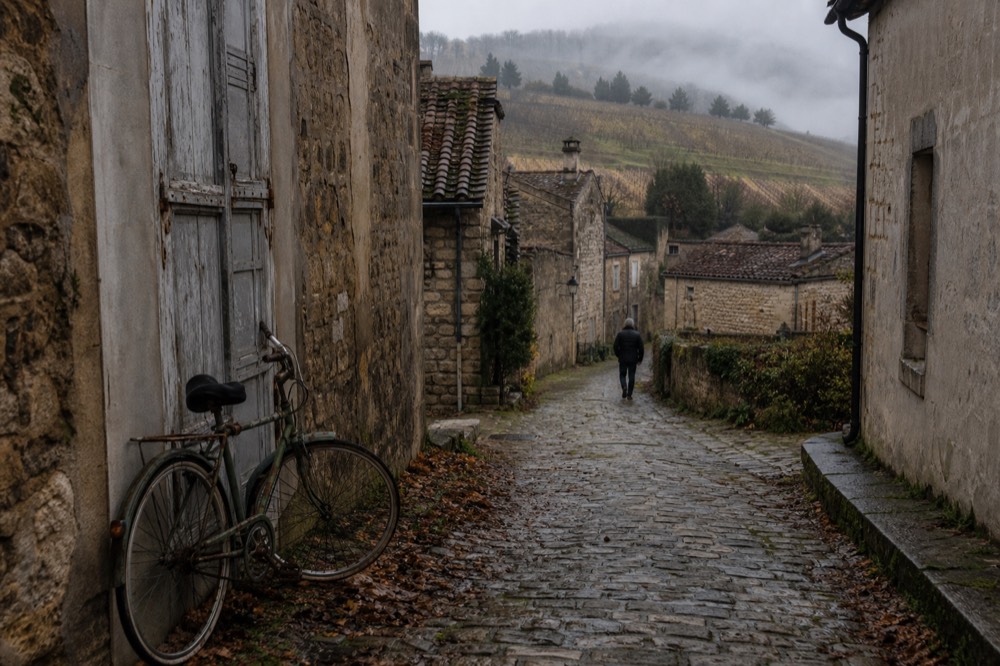
Winter has its own argument. The drying lofts, the fruttaio, are full from October through January, and pressing cannot legally start before 1 December, so a December or January visit can catch the appassimento in progress, racks of Corvina slowly turning to raisin under the rafters. The valley is quiet then, and the fog that pools in the valley floor while the hills stay clear is part of the show. Summer visits work too, but book the morning slots: July's mean daily maximum in Verona is 30.4 C, and a cellar at 15 degrees is where you want to be at noon.
One planning note on cost. Direct cellar visits in Valpolicella typically run about EUR 25-80 per person for a standard tour and tasting, with typical prices around EUR 40-60, and reservation is the rule at nearly every estate; most close on Sundays. Guided small-group tours from Verona start lower than many people expect, around $105 (checked September 2026) for a half-day with tastings included, so the maths often favours the tour over renting a car and paying two cellar fees separately. Our guide to Amarone wineries to visit lists the estates with published programmes and prices.
The verdict for a short Verona stay
For a two- or three-day Verona stay, Valpolicella is worth the half-day, and the reasoning compresses to four points: it is the closest real wine country to the city, the wines matter, the landscape rewards being in it, and the logistics all point toward letting someone else drive.
The valley is 20 minutes door to cellar. The wines are internationally important and locally priced. The landscape rewards being in it, whether that is an e-bike on a ridge lane or a glass of Ripasso on a terrace at San Giorgio. And the logistics, the 0.5 g/l limit, the ZTL, the parking tariffs, all point toward letting someone else drive, which the local tour market has made cheap and easy to do.
The one scenario where the answer is no: a single night in Verona between trains. Then stay in town, walk to a good wine bar, and order an Amarone by the glass instead. The valley needs four hours minimum to make sense, and squeezing it into less wastes both the drive and the wine.
For everyone else, the default plan is simple. Book a small-group half-day with pickup, taste the full ladder from Valpolicella to Recioto, and if the valley hooks you, come back for a full day with lunch or a self-guided e-bike loop on the second visit. That first trip is the one that answers the question, and the answer is yes.
In short: yes, Valpolicella is worth visiting on a short Verona stay, the standout villages are Marano and San Giorgio above Sant'Ambrogio, you do not need a car, and the best months are May, September and early October.
Common questions about visiting Valpolicella
Is Valpolicella worth visiting?
Yes. For a two- or three-day Verona stay it is the most rewarding half-day trip available: a working wine valley 20 minutes from the city, with cellar visits from around $42 to $105 (checked September 2026) and four distinct wine styles to taste.
What is the most beautiful town in Valpolicella?
Marano di Valpolicella is the strongest single pick for hillside views, with San Giorgio di Valpolicella above Sant'Ambrogio the pick for a photogenic village square and Romanesque church. None of the valley's villages is a big tourist town; the beauty is in the setting.
What Italian town near Verona is famous for wine?
Soave, about 31 km east of Verona, is the famous walled wine town. Within Verona's own hills, the Valpolicella villages, especially Sant'Ambrogio and Negrar, carry the fame for red wine.
Can you visit Valpolicella without a car?
Yes. Small-group tours with hotel pickup run from around $105 per person (checked September 2026), a self-guided e-bike half-day from around $110, and several estates are reachable by bus. Driving yourself is discouraged: Italy's 0.5 g/l limit means a few tastings can put a driver over it.
How far is Valpolicella from Verona?
The valley's main villages sit 14 to 23 km from central Verona, roughly 20 to 26 minutes by car, with Negrar the closest at 14 km and Fumane the farthest of the Classico communes at 23 km.
When is the best time to visit Valpolicella?
May, September and early October. The harvest usually runs mid-September to early October and began in late August in 2026, about two weeks early. Winter visits catch the grape-drying lofts in action, from October until pressing, which cannot start before 1 December.