Which part of Verona is best to stay in?
A practical comparison of Centro Storico, Veronetta, Porta Nuova and a Lake Garda base for a Verona wine trip: tour pickup points, the ZTL plate rule, the Verona Card and walking home after a tasting.
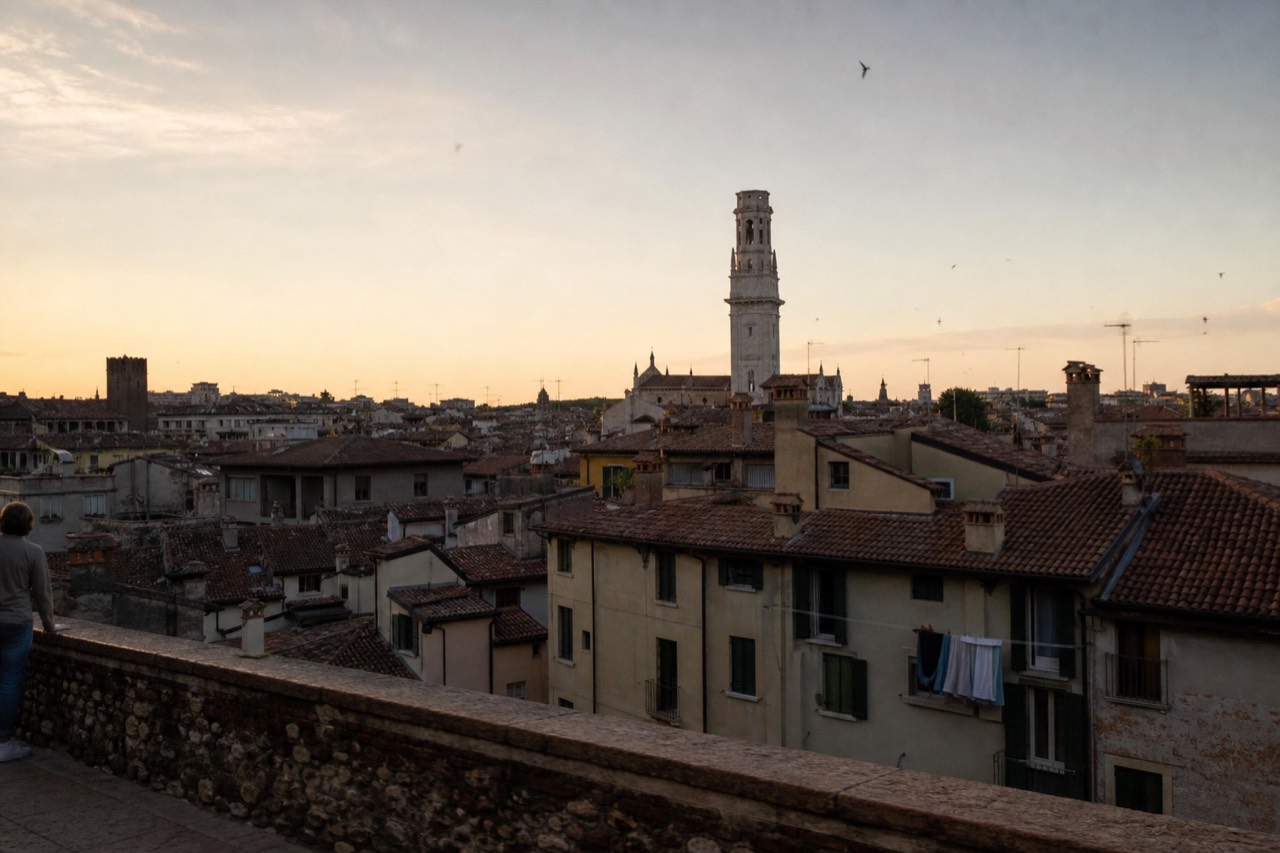
Verona's historic centre is small, walkable and hemmed in by the Adige, but the wine country around it is not. Valpolicella starts about 14 km north of Piazza Bra, Soave is 31 km east, and Bardolino sits 38 km west on the lake shore (see Lugana and Custoza: the white wines on Verona's lake shore). Those numbers, computed from central Verona, explain most of the accommodation question: if you sleep in the right part of town, every small-group tour picks you up at the door; if you sleep in the wrong one, you are budgeting taxi time before the first glass is poured.
The city also rewards a little planning because its wine geography splits in two directions. North and west lie the Corvina-based reds of Valpolicella, the Amarone cellars of Negrar, Fumane and Marano. East lies Garganega country, the Soave hills around the walled town of the same name. A base in Verona puts both within a half-day tour radius; a base anywhere else trades one for the other.
Which part of Verona is best to stay in?
For a wine-focused trip, the Centro Storico between Piazza Bra and Piazza delle Erbe is the best base: the small-group Valpolicella tours pick up at central hotels, the tasting rooms are a short walk apart, and you can walk home after an evening pour without touching a car or the ZTL.
The pickup geography is the decisive fact. The flagship small-group Amarone tasting tour, a 4.9 across over 760 reviews (checked September 2026), from around $145 per person (checked September 2026), offers hotel pickup in Verona with a departure point at Via Teatro Ristori in the city centre. The grand tour with lunch, from around $246 (checked September 2026), meets at Piazza Bra 28. Both points sit inside or on the edge of the historic centre, so a hotel anywhere in the core puts you within a ten-minute walk of a tour departure.
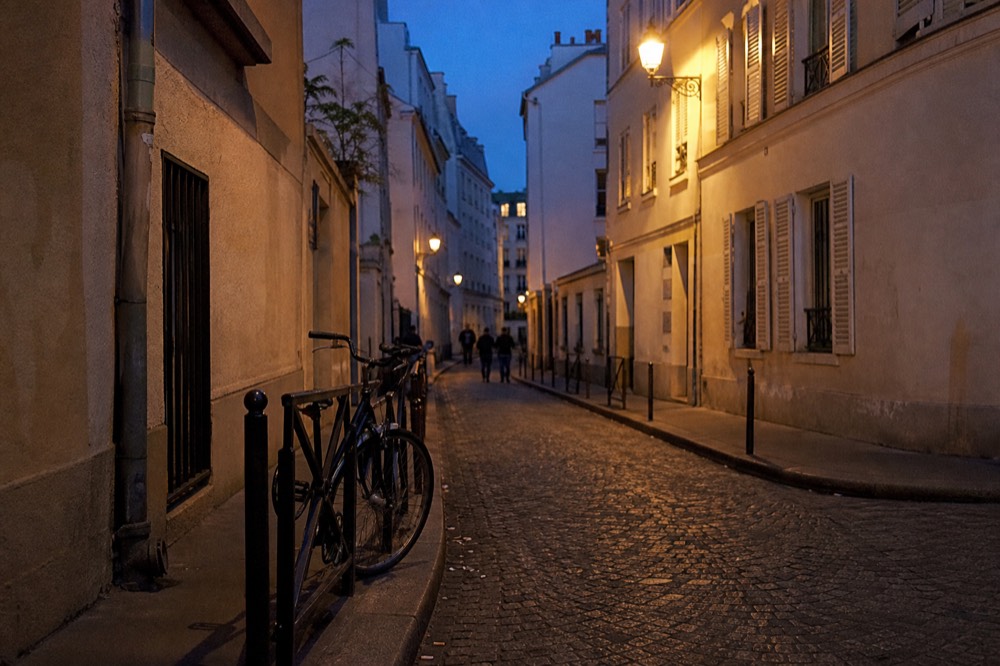
The centre also solves the drink-driving problem without a lecture. Italy's general blood-alcohol limit is 0.5 g/l, with a zero limit for drivers under 21 and in the first three years of a B licence. Staying central means you take transport to the wineries and walk home from any evening tasting in town. Our overview of tasting rooms in the city centre covers what you can reach on foot.
One caveat: the centre is inside the camera-controlled ZTL, limited since 1997 and watched by 11 electronic gates. Hotel guests may drive in, but only after the hotel registers your plate with the system, and the exemption explicitly does not cover holiday lets, per the Comune di Verona's ZTL page. Book a hotel inside the zone and tell the desk your plate at check-in; book a short-let and you park outside and walk.
Parking outside the ring is not free, either. The 2026 city parking plan charges EUR 2 per hour inside the ZTL ring, EUR 1.50 in the Zona Blu a few hundred metres out, and EUR 1 in the Zona Azzurra beyond that (checked September 2026), with weekend payment now in force. A car in central Verona is a cost and a liability, not a convenience, which is one more argument for a walkable base.
If you would rather end a day in the hills than in the middle of town, there is a middle path. A family cantina in the hills above the city runs a winery-direct tasting of five wines, from a white IGT up through Valpolicella, Ripasso and Amarone, with a cold-cuts and cheese platter and a panoramic terrace. It rates 4.9 across 279 reviews (checked September 2026) and costs from around $53 (checked September 2026). You meet at the winery, so it works from any base, and the 1 h 30 min format (checked September 2026) leaves the evening free.
For most first-time visitors the choice then collapses to a simple table:
| Base | Best for | Wine-tour logistics | Watch out for |
|---|---|---|---|
| Centro Storico | First visit, no car, evening tastings | Hotel pickup for small-group tours; everything walkable | ZTL plate registration; highest tourist tax, EUR 3.50 per night at a 3-star (checked September 2026) |
| Veronetta | Local feel, lower prices, river walks | 10-15 min walk to central pickup points | Steepish lanes; fewer hotels with parking |
| Porta Nuova | Train arrivals, day trips by rail | Station-side hotels; short walk or bus to pickups | Functional rather than romantic; across the river from the action |
| Lake Garda base | Chiaretto, Lugana, lake evenings | Only lake-departing tours pick up there; Valpolicella tours need the drive or a lake-departing product | 30-40 min drive to Verona each way |
Is it better to stay in Lake Garda or Verona?
Stay on Lake Garda only if the lake itself is half your holiday: from a shore base you get Bardolino, Chiaretto and Lugana on your doorstep, but Valpolicella and Soave become a 30-40 minute drive or a tour that departs from the lake.
The lake has real wine credentials of its own. Bardolino DOC covers 2,400 ha and bottled 21 million bottles in 2025, 11 million of them Bardolino and 10 million Chiaretto, per the consorzio's 2026 figures. Lugana DOC on the south shore, 2,600 ha of Turbiana, ships over 60% of its more than 27.5 million bottles to 65 countries. If rosé at sunset on a lungolago is the goal, Bardolino or Lazise deliver it without a tour bus.
The gap opens when you want Amarone. Lazise is 26 km and about 30 minutes from central Verona by car, Bardolino 38 km and about 38 minutes, and Valpolicella's cellar doors are a separate drive from either lake town, and the small-group tours with hotel pickup collect in Verona, not on the lake. There is exactly one product in our roster that closes that gap: a shared half-day that picks up at Peschiera del Garda, Bardolino and other lake points and runs into Valpolicella for a cellar visit, red-wine tastings and an agriturismo lunch. It rates 4.6 across 50 reviews (checked September 2026) and costs from around $103 (checked September 2026).
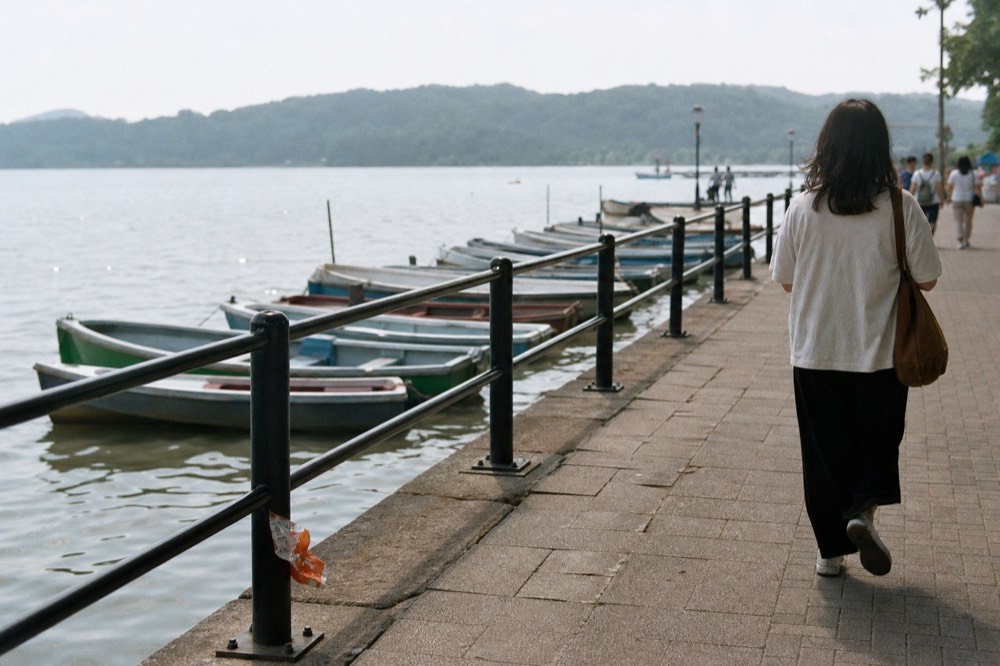
Rail is the tiebreaker. Verona to Peschiera del Garda takes about 13 minutes by regional train, roughly every 30 minutes, so a Verona base gives you the lake as an easy afternoon while a lake base gives you Verona as a day trip through summer shore traffic. Our post on the train from Verona to Lake Garda breaks the route down.
The lake also carries its own small costs that add up over a week. Bardolino's 2026 tourist tax runs EUR 1.50 to EUR 2.50 per person per night depending on category, Lazise EUR 1.20 to EUR 3.50, and Sirmione raised its holiday-home rate to EUR 2.80 (checked September 2026). None of these are ruinous, but they are the kind of detail that surprises visitors who assumed the lake towns were the cheap option.
Where to stay in Verona close to train station?
Porta Nuova, the modern quarter around the station of the same name, is the practical pick for rail arrivals: high-speed trains from Venice or Milan reach Verona in about 70 minutes, and the station is about 1.5 km, a 15-20 minute walk, from Piazza Bra and the tour departure points.
Porta Nuova suits two travellers in particular. Anyone arriving from Venice or Milan by high-speed rail lands here, and anyone using Verona as a hub for day trips by train saves the cross-town transfer each morning. The trade is atmosphere: the quarter is business hotels and offices, and your evening glass comes with traffic rather than a Roman bridge.
The walk into the centre is flat and direct, and ATV bus lines 11, 12 and 13 connect the station to Piazza Bra if you would rather not. From a station-side hotel, the central pickup points at Via Teatro Ristori and Piazza Bra are 20 minutes on foot or a few minutes by bus, so the small-group tours remain entirely practical.
There is a second, quieter argument for Porta Nuova that wine travellers overlook. The quarter sits outside the ZTL boundary, so a rental car parked at a station-side garage involves no plate registration, no gates and no fine risk. If your itinerary pairs Verona with a self-drive loop through Soave or the Lessini hills, a Porta Nuova base lets you keep the car without bringing it into the camera zone at all.
One card decision belongs in this section because station-hoppers use it most. The Verona Card from 1 September 2026 costs EUR 33 for 24 hours and EUR 38 for 48 hours, urban bus included, with app-only versions at EUR 29 and EUR 32 without transport (checked September 2026). It covers the civic monuments and museums and pays off if you are stacking the Arena, Juliet's house and the towers; it does nothing for wine country, which is a transport-and-booking question, not a ticket one.
Is Veronetta a good place to stay in Verona?
Yes: Veronetta, the quarter on the left bank east of Ponte Pietra, is the best-value central base, a 10-15 minute walk from every tour pickup point, with lower room rates, neighbourhood trattorias and the Roman theatre on your doorstep.
Veronetta was for centuries "little Verona," the part of the city that grew outside the Roman grid, and it still feels that way: stone lanes, students from the university, wine bars that locals actually use. The Roman theatre and the funicular path up to Castel San Pietro are here, and the climb rewards you with the whole tiled city in one view.
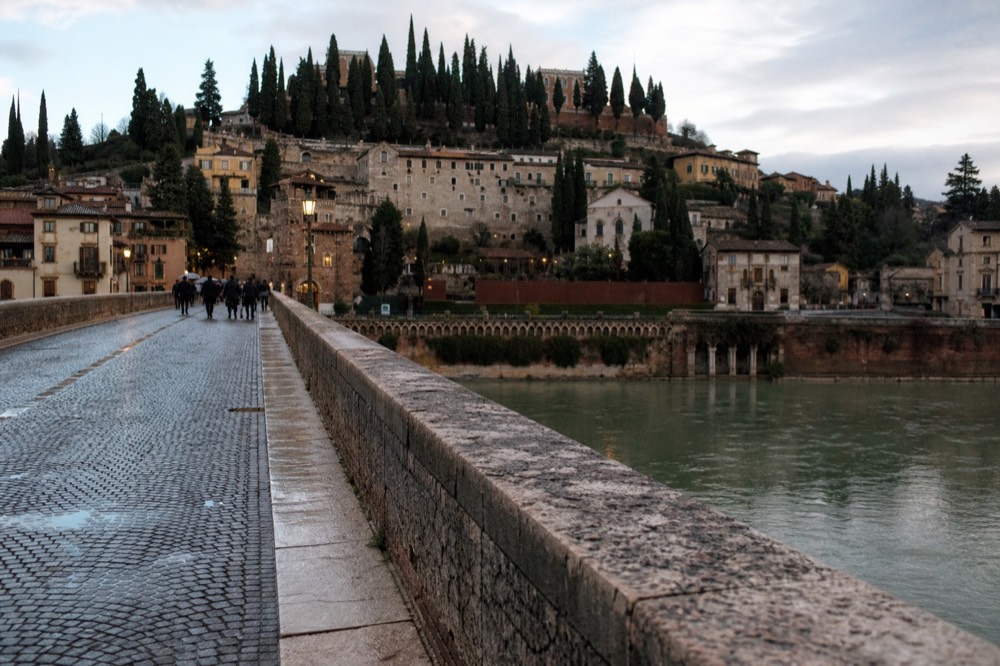
For wine logistics Veronetta behaves like the centre with a small surcharge of walking. The Via Teatro Ristori departure point is on the right bank near the Arena, about 15 minutes away across one of the bridges; Piazza Bra 28 is a similar walk. If your tour offers hotel pickup, a Veronetta address counts as a Verona hotel, so the van still comes to the door.
The one thing Veronetta cannot fix is the car question. The ZTL boundary runs along the inner bend of the Adige, and the same rule applies as in the centre: a hotel registers your plate, a holiday let does not. Since you should not be driving after tastings anyway, the quarter's real advantage is that it makes the car unnecessary.
Veronetta also gives you the city's best evening walk home. After a late pour on the right bank you cross Ponte Pietra with the theatre above you and the river below, and the whole trip takes minutes without a single decision about buses, taxis or parking. That walk, more than any amenity, is why locals recommend the quarter to friends.
Choosing by season and by what you want to drink
Season matters as much as geography: with July mean highs of 30.4 C and November the wettest month at 85 mm, summer visitors should lean toward evening formats and lake bases, while spring and autumn travellers can handle midday cellar tours from any quarter and catch the September harvest events.
The climate normals for 1991-2020, recorded at the Villafranca station, show a classic Po-valley pattern: hot, relatively dry summers, a wet November peak and 768 mm spread across the year. What that means for a base is simple. In July and August, a lake shore with its evening breeze and a Chiaretto in hand beats a hot attic room in the centro; in April, May, September and October, the centre is comfortable and the cellar tours, which run year-round, are at their best.
Autumn deserves a special word. The 2026 Valpolicella harvest started about two weeks early, in late August, and Bardolino's Festa dell'Uva e del Vino runs 1-5 October 2026 on the lungolago. A September or early-October stay puts you among the grape trucks and the festival stands, whichever base you choose.
The honest summary, and the one this site's own Verona Wine Tours planning pages are built around: the Centro Storico wins on convenience, Veronetta on value, Porta Nuova on rail logistics, and the lake on atmosphere, provided you accept that Amarone country is a drive away. Every one of the three formats below departs from or works with a Verona base, and each carries free cancellation, so the base decision stays reversible.
The short answers: the Centro Storico for tour pickup and walkability, Veronetta for value, Porta Nuova for rail arrivals, and the lake only if the lake is half the point of the trip. The details below cover the ZTL rule, the Verona Card and the walk-home question.
Common questions about where to stay in Verona
Which part of Verona is best to stay in?
For a wine trip, the Centro Storico: small-group Valpolicella tours pick up at central hotels or depart from Via Teatro Ristori and Piazza Bra, and you can walk home from evening tastings. Veronetta is the best-value alternative, a 10-15 minute walk from the same pickup points.
Can I drive to my hotel inside the ZTL?
Yes, if it is a hotel: the hotel registers your plate with the system and you may circulate freely. The exemption does not cover holiday lets, so short-let guests must park outside the zone. Unregistered entry is caught on camera and fined.
Is it better to stay in Lake Garda or Verona?
Stay in Verona if Amarone and Soave are the priority, since the small-group tours depart from the city. Stay on the lake if Chiaretto, Lugana and lake evenings matter more; one shared half-day tour picks up at Peschiera and Bardolino and runs into Valpolicella for lunch.
Where to stay in Verona close to train station?
Porta Nuova, the quarter around Verona Porta Nuova station. It is about 1.5 km, a 15-20 minute walk, from Piazza Bra, with ATV bus lines 11, 12 and 13 covering the same trip.
Is Veronetta a good place to stay in Verona?
Yes. It is central enough for every tour pickup, cheaper than the right-bank core, and has the Roman theatre, Ponte Pietra and the Castel San Pietro viewpoint on the doorstep.
Does the Verona Card help with wine tours?
No. The Verona Card, EUR 33 for 24 hours and EUR 38 for 48 hours from 1 September 2026, covers civic monuments and urban buses. Wine tours are booked separately and every listing in our roster carries free cancellation.