Bardolino Wine: Grapes, Zones and the Lake Garda Red Worth Knowing
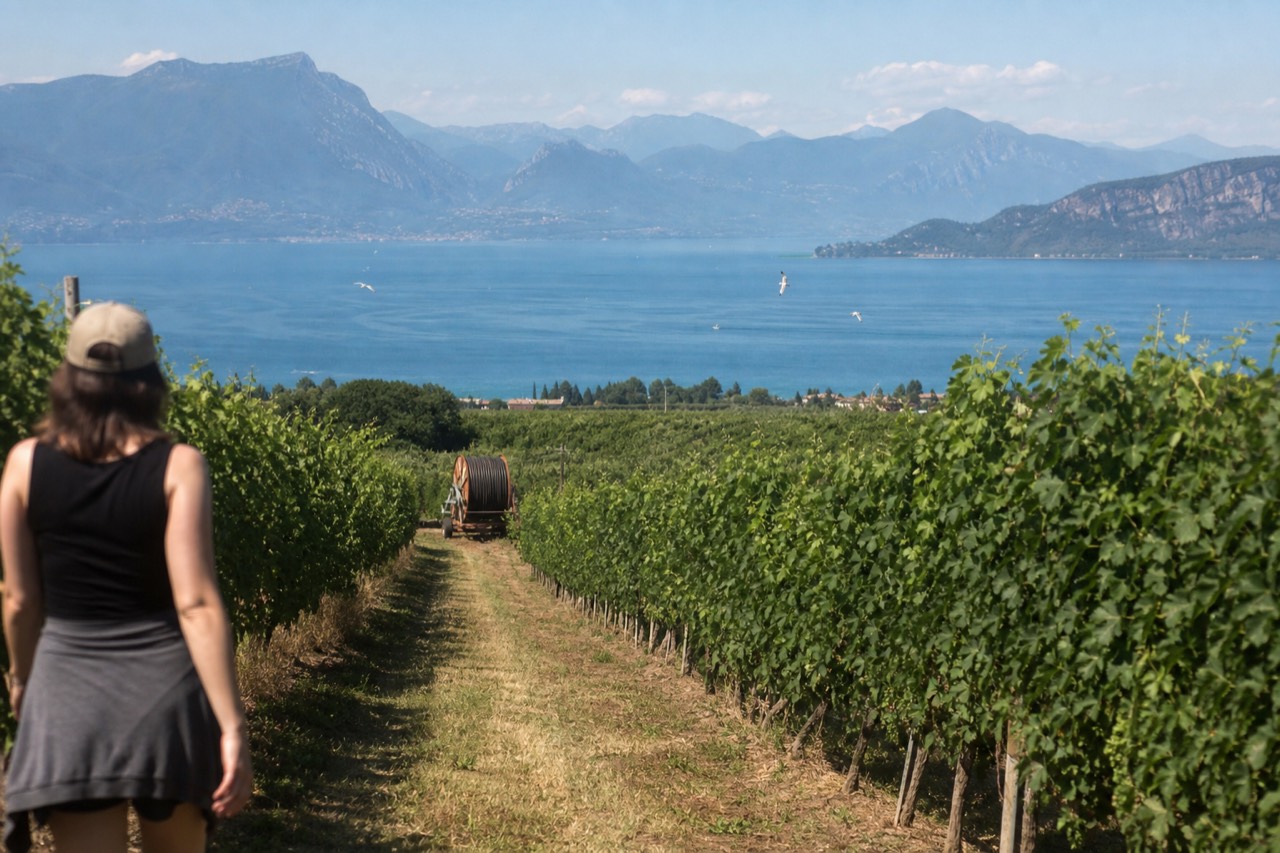
Bardolino is the light red of Lake Garda's eastern shore, built on Corvina and Rondinella, the same grapes behind Valpolicella, but grown within sight of the water and made to drink young.
Short answer
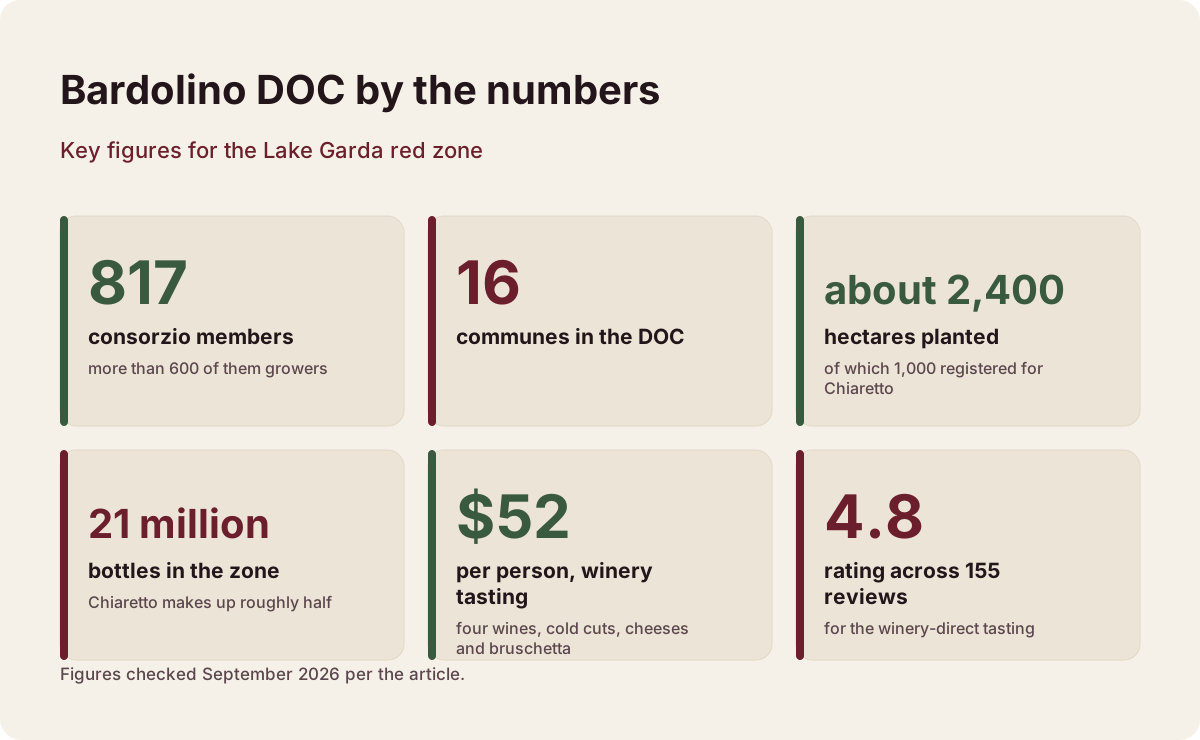
Bardolino is a light-bodied red DOC from 16 communes east and south-east of Lake Garda, made from Corvina 35-95%, Rondinella 5-40% and small shares of other local reds, at minimum 10.5% alcohol. Its rosé partner, Chiaretto, accounts for about 10 million of the zone's roughly 21 million bottles.
Bardolino the town sits on the south-eastern shore of Lake Garda, and Bardolino the wine grows on the hills behind it, a band of glacial moraine that stretches from the water's edge toward Affi and Costermano. The denomination is one of the oldest recognised in Italy: the Classico zone dates to a 1968 decree, and the consorzio that guards it now counts 817 members, more than 600 of them growers (checked September 2026). What surprises most visitors is how different the wine is from its inland neighbour Valpolicella. Same leading grapes, completely different personality: Bardolino is bright, low-tannin and built for drinking within a year or two, not for drying racks and long aging.
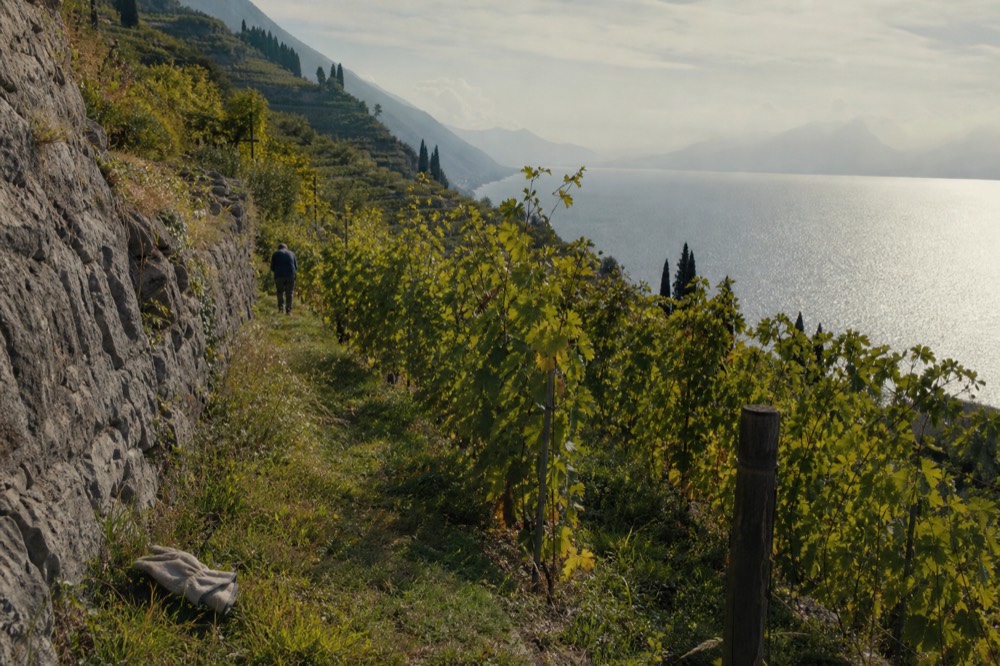
That difference is geography, not marketing. The Garda shore moderates the climate, the soils are stony morainic gravel rather than the limestone of the Valpolicella hills, and the disciplinare asks for nothing like Amarone's appassimento. The result is a wine that the zone itself positions as an everyday red, and one that has quietly become a rosé powerhouse: Chiaretto di Bardolino, the rosé made from the same grapes, now matches the red bottle for bottle.
What is Bardolino wine?
Bardolino is a light, cherry-and-herb-scented red DOC from 16 communes on the south-eastern side of Lake Garda, made mainly from Corvina and Rondinella, with a minimum of 10.5% alcohol, a maximum permitted yield of 12 tonnes per hectare, and a Classico heart of six communes around the town itself.
The denomination covers four main styles. Basic Bardolino is the fresh, young red. Bardolino Classico comes from the historic six-commune core and tends to have a touch more structure. Bardolino Novello is the carbonic-maceration new wine, which by law must be bottled by 31 December of the harvest year. And Chiaretto is the rosé, which since the 2010s has become the zone's commercial engine: in 2025 the consorzio counted 21 million bottles in total, split almost evenly, 11 million Bardolino and 10 million Chiaretto, with 60% of production exported (checked September 2026).
The wine's character comes from a short maceration. Where an Amarone might spend weeks on the skins after months of drying, Bardolino typically spends a few days, pulling colour and fruit but little tannin. Serve it slightly cool, around 14-16 C, and it does exactly what the locals ask of it: accompany lake fish, pizza, or an evening on the lungolago without demanding attention.
What grapes is Bardolino made from?
The recipe is Corvina 35-95% (with Corvinone allowed to replace up to 20% of it), Rondinella 5-40%, and up to 20% of other non-aromatic red varieties of the Verona province, max 10% per variety, with Molinara allowed up to 15%.
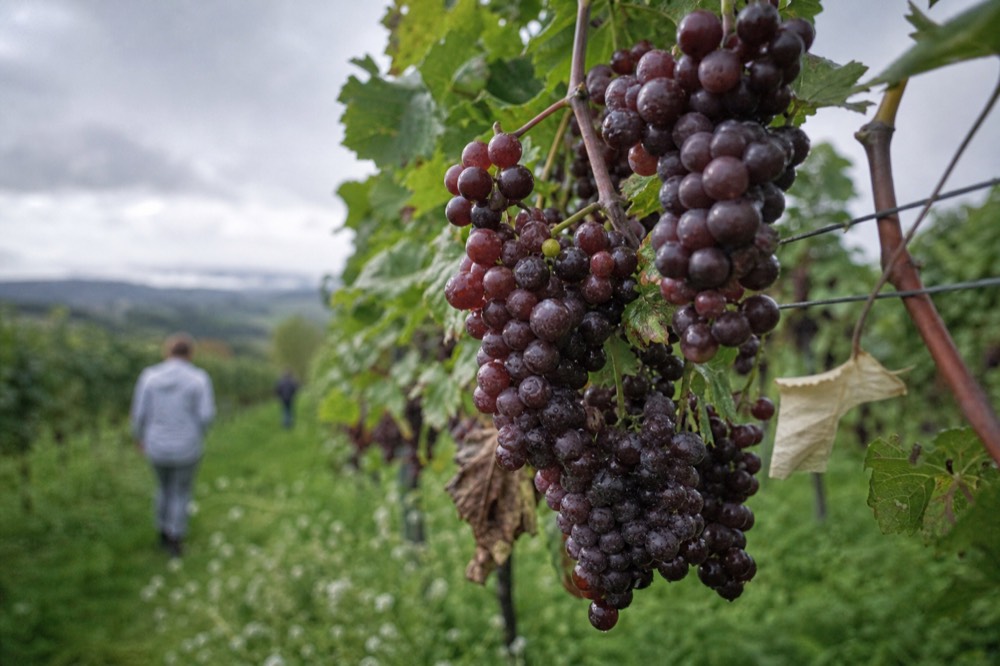
Those percentages come straight from the production rules published by the consorzio, which consolidates the disciplinare as amended in 2021. Corvina is the flavour grape, giving the cherry fruit and the violet perfume. Rondinella is the workhorse, reliable and generous. Molinara, once a major component, now plays a supporting role and brings freshness and a slightly salty edge. The full grape framework looks like this:
| Grape | Share of the blend | Role in the wine |
|---|---|---|
| Corvina (Cruina) | 35-95% | Cherry fruit, floral perfume, colour |
| Corvinone | may replace up to 20% of Corvina | Structure, spice, bigger aromatics |
| Rondinella | 5-40% | Reliable volume, mid-palate weight |
| Other Verona reds | max 20% total, 10% per variety | Blending flexibility |
| Molinara | up to 15% within that 20% | Acidity, freshness, drinkability |
If the list looks familiar, it should. These are the same varieties that make Valpolicella and Amarone an hour inland. The distinction is entirely in what happens after picking: no drying, short maceration, early release. It is one of the clearest cases in Italy of the same grapes producing two totally different wines because of site and technique, and if you want the full side-by-side, our Valpolicella wine styles guide breaks down the inland ladder from Valpolicella to Recioto.
For travellers, the practical takeaway is that a Bardolino tasting is a gentle introduction to Verona-province reds. You taste Corvina in its lightest, most aromatic form, which makes the step up to Ripasso and Amarone much easier to read later.
Where is Bardolino made: the 16 communes, Classico and the three sub-zones
Bardolino DOC spans 16 communes east and south-east of the lake, from Torri del Benaco down to Peschiera and inland to Valeggio sul Mincio; the Classico zone is the six historic communes of Bardolino, Garda, Lazise, Affi, Costermano and Cavaion; and three named sub-zones, Montebaldo, La Rocca and Sommacampagna, sit above them with lower yields and a minimum of one year's ageing.
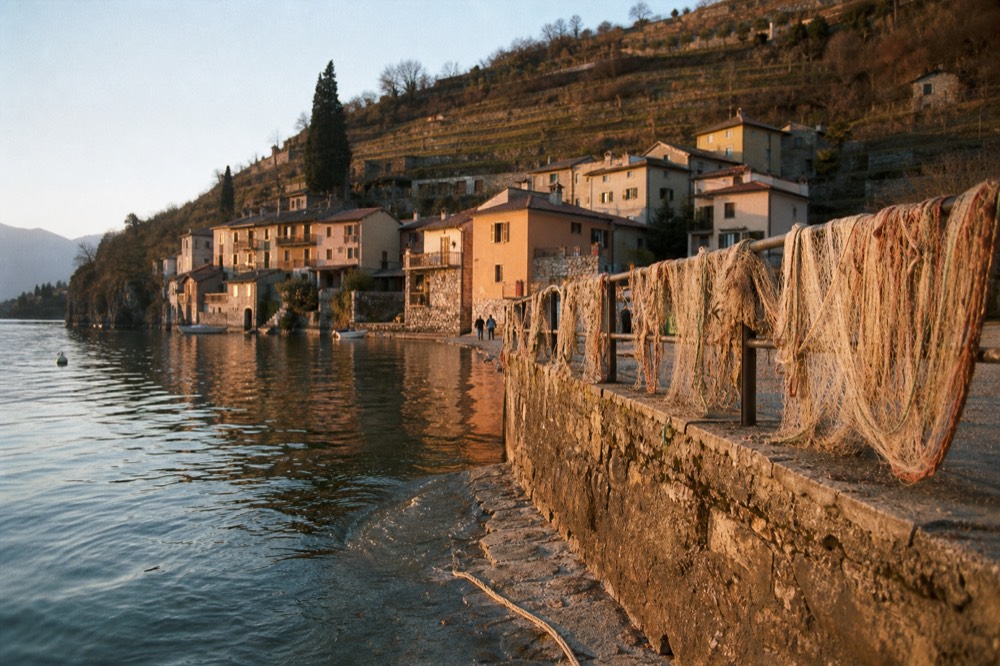
The full denomination is a wide arc of moraine: Bardolino, Garda, Lazise, Affi, Costermano, Cavaion Veronese, Torri del Benaco, Caprino Veronese, Rivoli Veronese, Pastrengo, Bussolengo, Sona, Sommacampagna, Castelnuovo del Garda, Peschiera del Garda and Valeggio sul Mincio. The Classico core, recognised in 1968, is the lakeside cluster where the zone's reputation was built. The sub-zones are the newest layer: Montebaldo, La Rocca and Sommacampagna are now in production with stricter yield limits and a minimum one-year ageing requirement (checked September 2026), which puts them closer in ambition to a serious food red than to the quaffing Bardolino of the beach bars.
| Zone layer | Communes | What it tells you on a label |
|---|---|---|
| Bardolino DOC | 16, lake shore to Mincio moraine | The everyday red and rosé of the Garda shore |
| Bardolino Classico | Bardolino, Garda, Lazise, Affi, Costermano, Cavaion | Historic heartland, a step more structure |
| Sub-zone Montebaldo | northern hills above the lake | Lower yields, min 1 year ageing |
| Sub-zone La Rocca | central hill zone near Bardolino town | Lower yields, min 1 year ageing |
| Sub-zone Sommacampagna | southern moraine toward Verona | Lower yields, min 1 year ageing |
The consorzio's own numbers frame the scale: about 2,400 hectares planted, of which 1,000 are registered for Chiaretto (checked September 2026). That is a small zone by Veneto standards, roughly a quarter of Soave's planted area, and it explains why most estates here are family-scale operations with tasting rooms rather than industrial platforms.
Is Bardolino a good wine?
Yes, in the way the zone intends it: Bardolino is a very good light red, fresh and food-friendly, and the Classico and sub-zone bottlings now show genuine depth. It is not a wine for collectors or for anyone expecting Amarone's power, and judging it by that standard misses the point entirely.
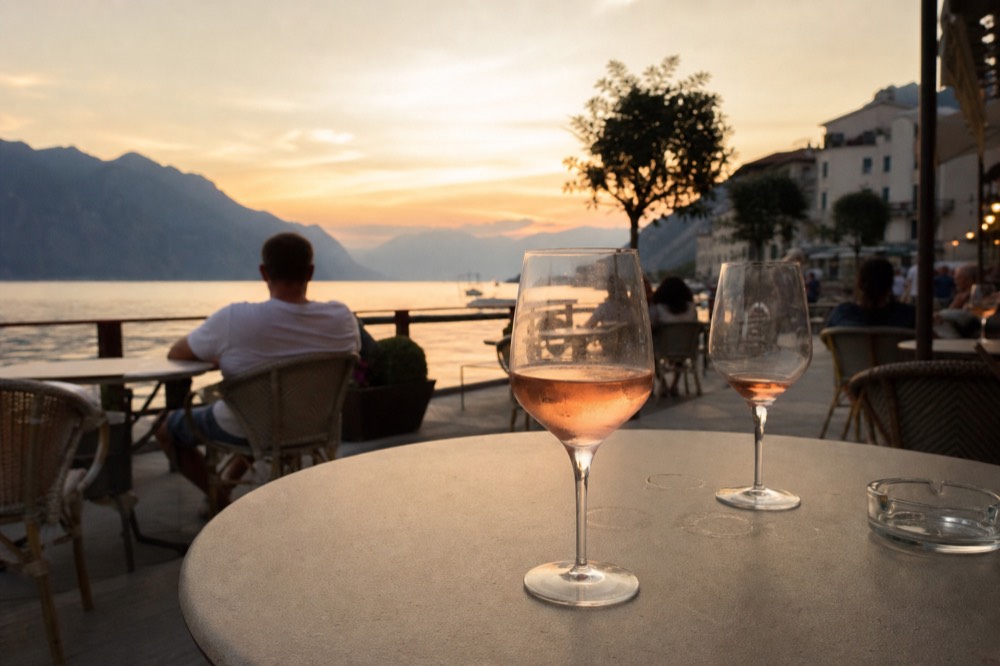
Bardolino's reputation problem is historical. For a long stretch in the late twentieth century, oceans of thin, over-cropped Bardolino reached export markets, and the name acquired a cheap-wine shadow it has spent two decades shedding. The modern response has been quality-driven: the sub-zone layer with lower yields, the repositioning of Chiaretto as a serious pale rosé, and a producer base, 817 consorzio members with 92% coverage of the denomination, that is unusually well organised for a zone this size (checked September 2026).
The honest buying advice is simple. A basic Bardolino at a lakeside restaurant is exactly right with grilled lake fish or a pizza, served cool. A Bardolino Classico from a named estate, or a bottle labelled Montebaldo or La Rocca, is worth taking seriously at the table and even cellaring briefly. And Chiaretto, which we come to next, is arguably the zone's most consistent quality performer of all.
If you want to taste this on site, the winery-direct tasting in the Garda hills above Bardolino is the cheapest guided option on the lake: vineyard walk, cellar visit, four wines, cold cuts, cheeses and bruschetta, rated 4.8 across 155 reviews, from around $52 per person (checked September 2026). Note that it meets you at the winery, there is no transport included, so it suits a day when you have a car or are staying lakeside.
What wine is Bardolino famous for?
Bardolino is famous for two wines: the light red that carries the town's name, and Chiaretto di Bardolino, the pale rosé that now makes up roughly half of the zone's 21 million bottles and has become the face of Garda wine tourism.
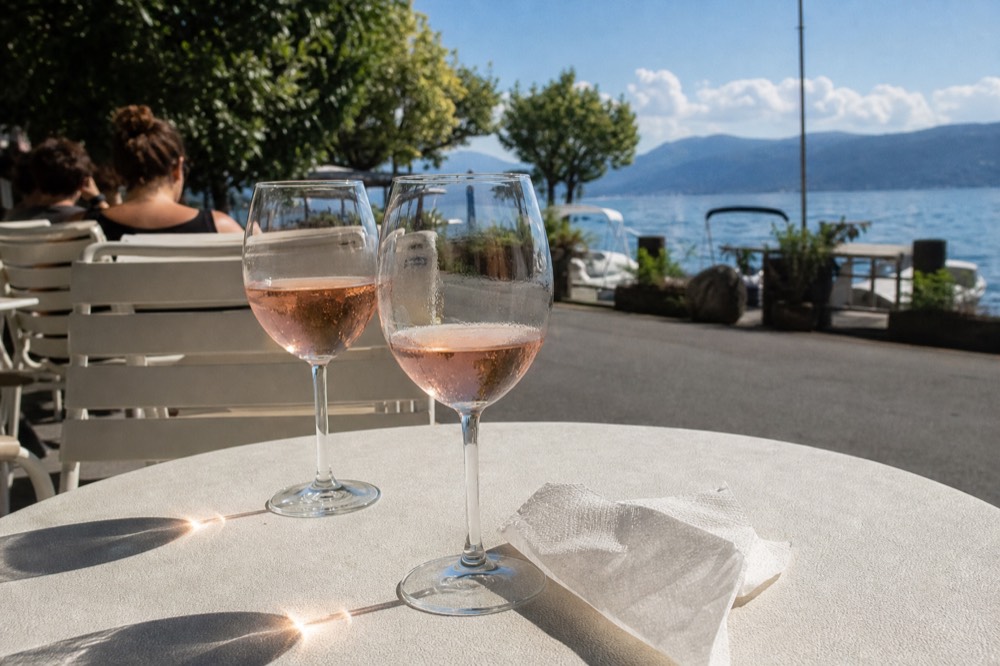
Chiaretto's rise is the zone's real story of the last decade. It is made from the same Corvina-led blend, given a short skin contact that leaves a salmon-pink colour, and it now sells 10 million bottles a year against the red's 11 million (checked September 2026). The zone even has its own festival for it: the Palio del Chiaretto ran its 21st edition in early June 2026 across the lakefronts of Bardolino and Lazise, with tastings, concerts and a competitive tasting of 29 producers. The rosé is dry, crisp and distinctly savoury compared with Provence-style pinks, and it is the bottle you will see on more lakefront tables than any other wine.
The red still anchors the name, though. Bardolino Novello, the carbonic-maceration release bottled by 31 December each year, is one of the last Italian novelli with a real following, and the autumn release window is a genuine event in the town. For a fuller picture of the neighbouring whites across the lake's south shore, our Lugana and Custoza guide covers the Turbiana-based wines of Sirmione and Peschiera, which make a natural white counterpart to a Bardolino day.
When should you visit: the grape harvest and the lake's wine festival
The best wine-time to be in Bardolino is late September into early October, when the harvest comes in and the town stages its historic grape and wine festival on the lakefront, an event that traditionally runs across the first days of October.
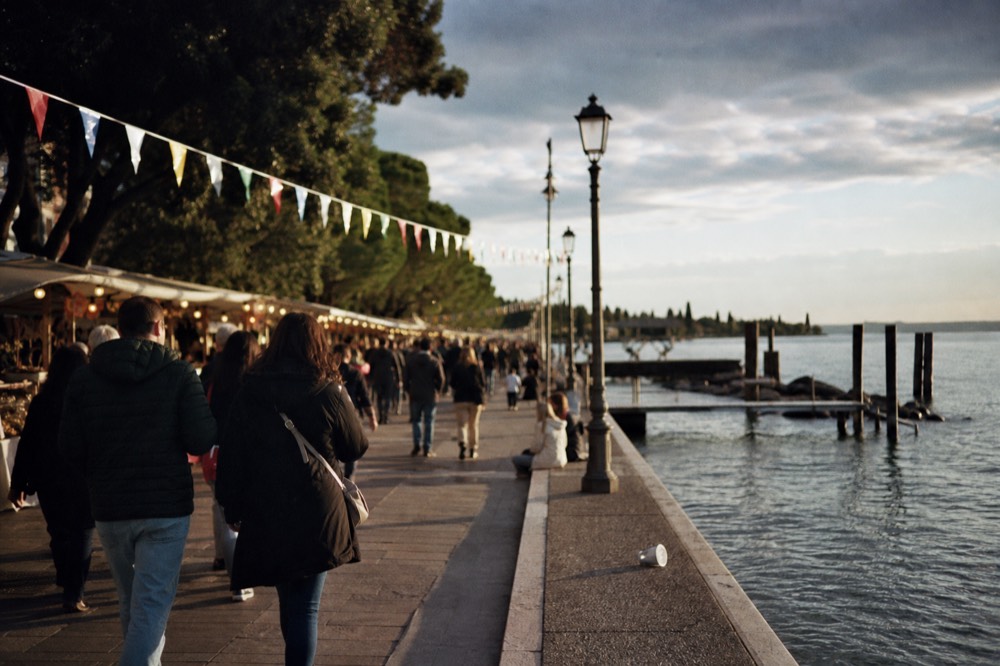
The Festa dell'Uva e del Vino di Bardolino is one of Italy's longest-running harvest festivals, and its 95th edition filled the lakefront between Punta Mirabello and Punta Cornicello plus the Carrara-Bottagisio park with stands, tastings, music and shows across the first five days of October 2026 (checked September 2026). The event's rhythm is evergreen: expect the lakefront promenade lined with producer stands, a tasting glass you carry from stall to stall, and the new vintage everywhere. If you are planning around it, book lakeside accommodation months ahead, because the town fills completely.
Harvest itself usually runs mid-September into early October, matching the Corvina picking window across the Verona province. That makes early October the sweet spot: vines heavy with fruit, the festival on, and the summer lake crowds gone. Spring is the other quiet, pleasant window, with the Palio del Chiaretto traditionally opening the lakeside season in early June.
Which lakeside cantine take reservations?
Most Bardolino-zone estates work on the same norm as the rest of the Verona province: reservation required, opening Monday to Saturday, with Sunday visits uncommon; the zone's wine museum in Bardolino town is the one walk-in option, free for individuals.
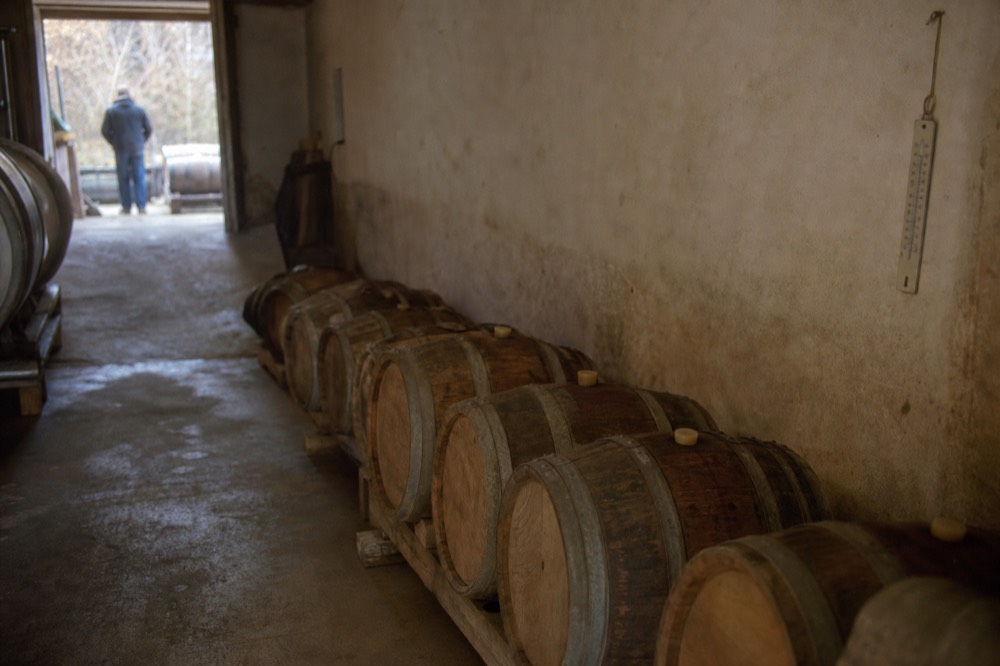
The reservation-first rule is not a Garda quirk, it is standard practice across the province, where cellar tours with tasting generally run EUR 25-80 per person and premium formats EUR 100-150. The one genuinely walkable stop is the Zeni Museo del Vino in Bardolino itself: entry is free for individual visitors up to 10 people, open in summer Monday to Saturday 09:30-12:30 and 14:00-19:00, Sunday 09:00-13:00, with groups over 10 needing a guided-tour booking (checked September 2026). It is a proper museum with an olfactory gallery and a barrique cellar, and it makes a good rainy-day anchor for a Bardolino town visit.
| Way to taste Bardolino | What it involves | Ballpark cost per person |
|---|---|---|
| Estate visit, booked direct | Cellar tour plus tasting at the winery, usually Mon-Sat | about EUR 25-80, check the estate |
| Wine museum in Bardolino town | Free walk-in museum visit, small groups | free for individuals up to 10 |
| Winery-direct guided tasting on the Garda hills | Vineyard walk, cellar visit, four wines with food | from around $52, (checked September 2026) transport not included |
| Festival glass during the October festa | Producer stands along the lakefront | glass price set each year by the festival |
| Boat cruise with tasting from Sirmione | Historic boat, Lugana-side tasting with snacks | from around $116, (checked September 2026) minimum numbers apply |
Note that the big-name Valpolicella estates publish their fee ladders openly, while several Bardolino-zone producers keep theirs off the web, so email or phone is often the only route. The consorzio's member directory is the reliable starting point for finding current producers. For the wider picture of estates across the province, including the ones with no walk-in programme at all, see our wineries near Verona guide.
The Sirmione boat option in the table above is worth a flag if your base is the southern lake: a historic cruise with wine tasting and snacks run by Garda Tours, rated 4.6 across 297 reviews, from around $116, departing Sirmione with minimum numbers applying (checked September 2026). It often sells out, so book it ahead rather than hoping on the day.
How do you get to Bardolino wine country from Verona?
Bardolino is about 38 km and 38 minutes' drive from central Verona in free-flowing traffic, or a roughly 13-minute regional train from Verona Porta Nuova to Peschiera del Garda followed by a short bus or boat hop up the shore.
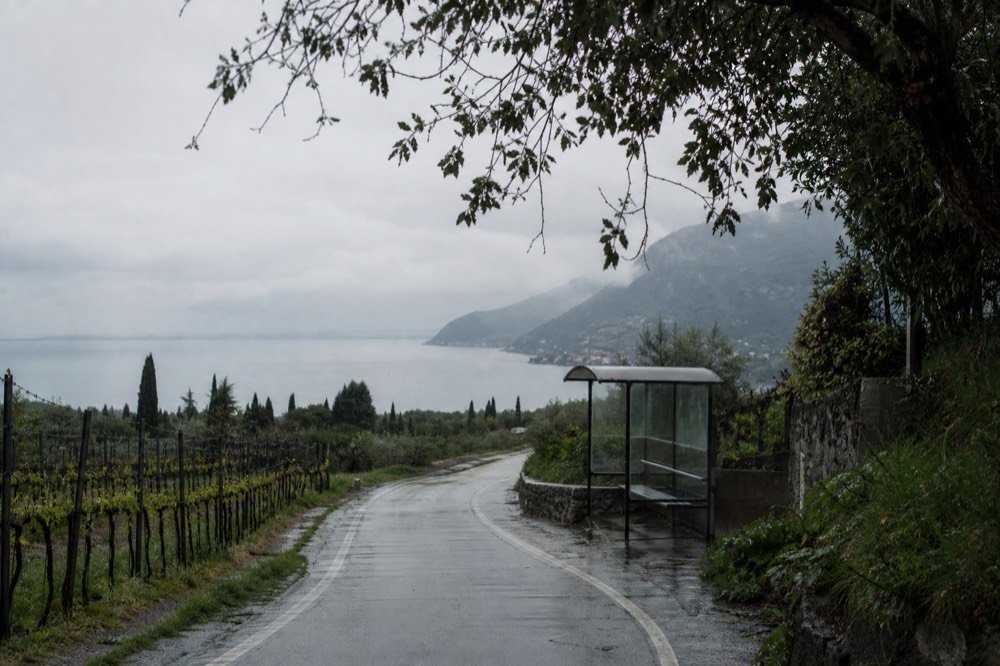
The drive is the flexible option and the one most winery visits effectively require, since estates sit up in the hills behind the lake rather than in town. Add slack in summer: the lake shore road between Lazise and Bardolino jams badly on weekends. The train-plus-boat combination is the relaxed alternative, and since April 2026 the lake navigation sells a whole-lake day ticket at EUR 39.50 and a one-zone day ticket at EUR 23.50, which covers the hops between Peschiera, Bardolino and Garda handsomely (checked September 2026).
One planning point that matters for drivers: Italy's blood-alcohol limit is 0.5 g/l, with a zero limit for drivers under 21 and those in the first three years of a licence. A day of tasting across four or five estates adds up quickly, so either nominate a driver, use the train-and-boat route, or hand the driving to a tour. If you are staying on the lake itself rather than in Verona, there is a half-day that does exactly that: a shared tour with hotel pickup at Peschiera del Garda, Bardolino and other lake points, driving you into Valpolicella for a cellar visit, red-wine tastings and lunch at an agriturismo, rated 4.6 across 50 reviews and from around $103 per person (checked September 2026). It is the only Valpolicella product on the roster that departs from the lake, which makes it a neat pairing with a Bardolino stay (see Is Valpolicella worth visiting?).
For combining the lake with the rest of the Verona wine country, the Lake Garda wine tour guide covers the whole lakeside wine map, from Verona Wine Tours' perspective: Lugana on the south shore, Bardolino and Custoza in the middle, and the Valpolicella hills an hour inland.
Bardolino is a light Corvina-based red from 16 communes near Lake Garda, with a Classico core of six communes, three newer sub-zones, and a rosé partner, Chiaretto, that now sells about 10 million bottles a year; the questions below cover the details.
Common questions about Bardolino wine
Is Bardolino a good wine?
Yes, judged as what it is: a fresh, low-tannin red made for early drinking, where the Classico and sub-zone bottlings add real depth. It is not a power wine, and comparing it with Amarone misses the point. Modern yield discipline and the new sub-zones have lifted the floor considerably from the zone's thin-wine era.
What wine is Bardolino famous for?
Two: the light red Bardolino DOC itself, and Chiaretto di Bardolino, the pale salmon rosé that now accounts for roughly 10 million of the zone's 21 million bottles and is the wine most visible on the lakefront in summer.
What grapes go into Bardolino?
Corvina 35-95%, with Corvinone allowed to replace up to 20% of the Corvina; Rondinella 5-40%; and up to 20% of other non-aromatic Verona reds, max 10% per variety, with Molinara allowed up to 15%. The same leading varieties that make Valpolicella.
What is the difference between Bardolino and Bardolino Classico?
Classico comes from the six historic communes, Bardolino, Garda, Lazise, Affi, Costermano and Cavaion, recognised in 1968. The wider DOC spans 16 communes. Classico bottlings tend to show a step more structure, and the three sub-zones, Montebaldo, La Rocca and Sommacampagna, add lower yields and a minimum of one year's ageing on top.
When is the Bardolino grape festival?
The Festa dell'Uva e del Vino traditionally fills the Bardolino lakefront across the first days of October, timed to the harvest, with producer stands, tastings and music. The 95th edition ran 1-5 October 2026. Book lakeside accommodation well ahead if you plan a visit around it.
Can you visit Bardolino wineries without a booking?
Rarely. The province-wide norm is reservation required, with most estates open Monday to Saturday. The walk-in exception is the Zeni wine museum in Bardolino town, free for individuals up to 10 people. For cellar tastings, book ahead, or take a guided winery-direct tasting that includes the reservation for you.